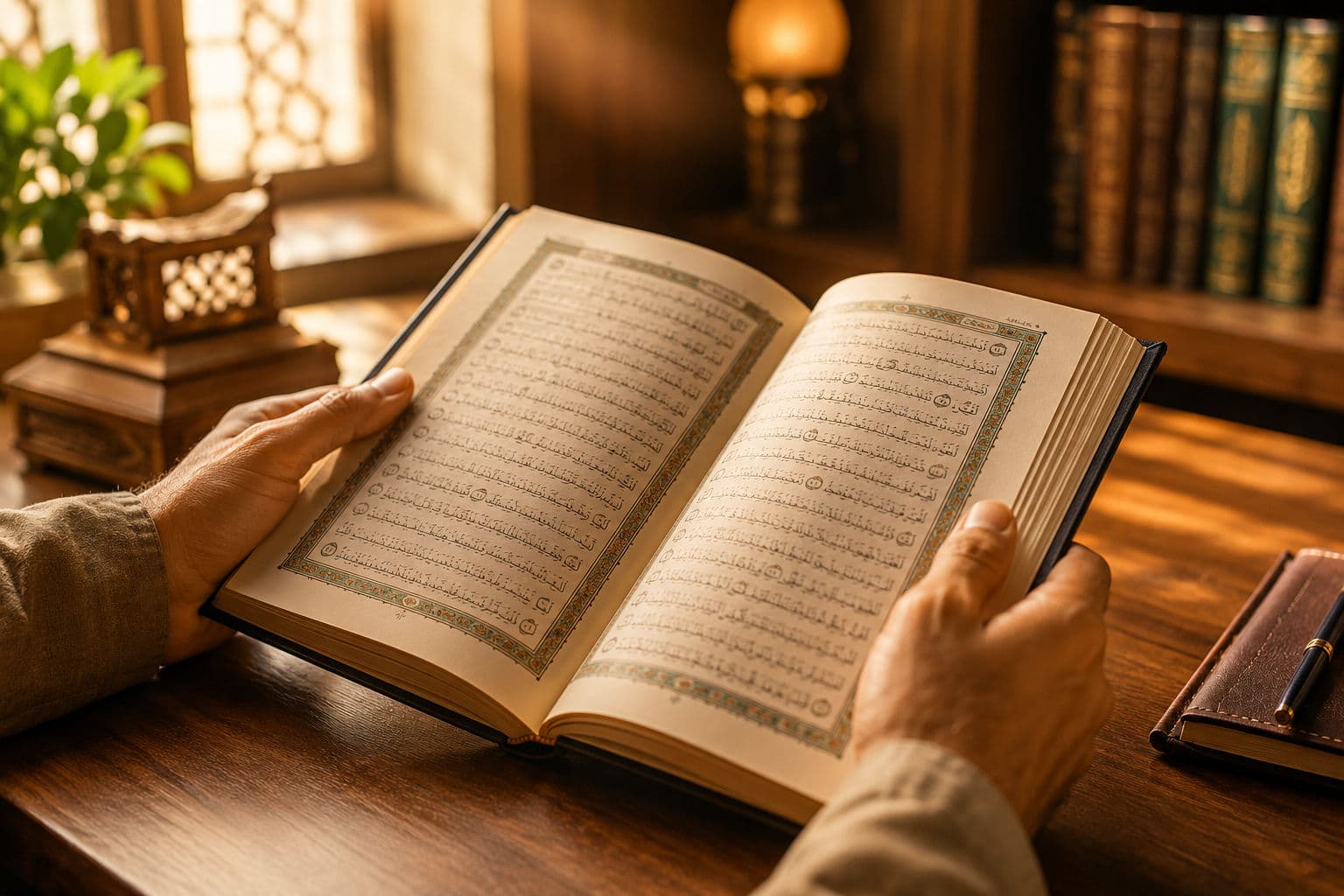
There is a moment that many Quran students describe in almost the same words.
It is the moment when they first hear the Quran recited with proper Tajweed — with letters flowing from their correct places, words given their full weight, pauses falling exactly where they should. They say it stopped them. It moved them in ways they could not fully explain. Something in the sound reached them before the meaning did.
That is not a coincidence. That is the Quran doing what it has always done.
The Quran is not merely a book of guidance. It is a living recitation — Qur'an literally means "that which is recited." And at the heart of reciting it correctly lies one of Islam's most beautiful and enduring sciences: Tajweed.
For many beginners, Tajweed can feel intimidating. It sounds technical. It sounds like something reserved for scholars, Hafiz students, or people who grew up in madrasas. But that could not be further from the truth. Tajweed is for every Muslim. It is a gift, not a burden — a doorway to a deeper, more beautiful relationship with the words of Allah.
This article will walk you through everything you need to understand about Tajweed: what it is, why it matters so deeply, what happens when it is neglected, and how you or your child can begin learning it — no matter your age, background, or current level.
What Is Tajweed? Understanding the Meaning Behind the Word
The word Tajweed (تجويد) comes from the Arabic root j-w-d, which means to improve, to make excellent, to do something beautifully. When applied to Quran recitation, Tajweed refers to the set of rules and principles that govern how each letter of the Quran is properly pronounced — from the correct point of articulation in the mouth and throat, to the precise lengthening of vowels, to the rules of merging, stopping, and flowing between words.
But Tajweed is more than a technical rulebook. It is an act of honour toward the Quran itself.
Think of it this way: if you were to recite a poem written by a great poet, you would want to pronounce every word as the poet intended — with the right rhythm, the right stress, the right emotion. How much more, then, should we care about reciting the speech of Allah with the beauty and precision it deserves?
The scholars of Islam have defined Tajweed as: "Giving every letter its right and due, and observing the rules and characteristics of each letter, with its qualities and manner of pronunciation."
In practice, this means learning things like:
Where each Arabic letter originates in the mouth, throat, or nasal passage (called makhaarij al-huruf)
The natural characteristics of each letter (called sifaat al-huruf)
Rules for lengthening vowels (madd)
Rules for nasalization (ghunnah)
Rules for merging similar letters (idghaam)
Where to pause and where to continue in recitation
When all of these come together, the result is a recitation that is not just correct — it is genuinely beautiful.
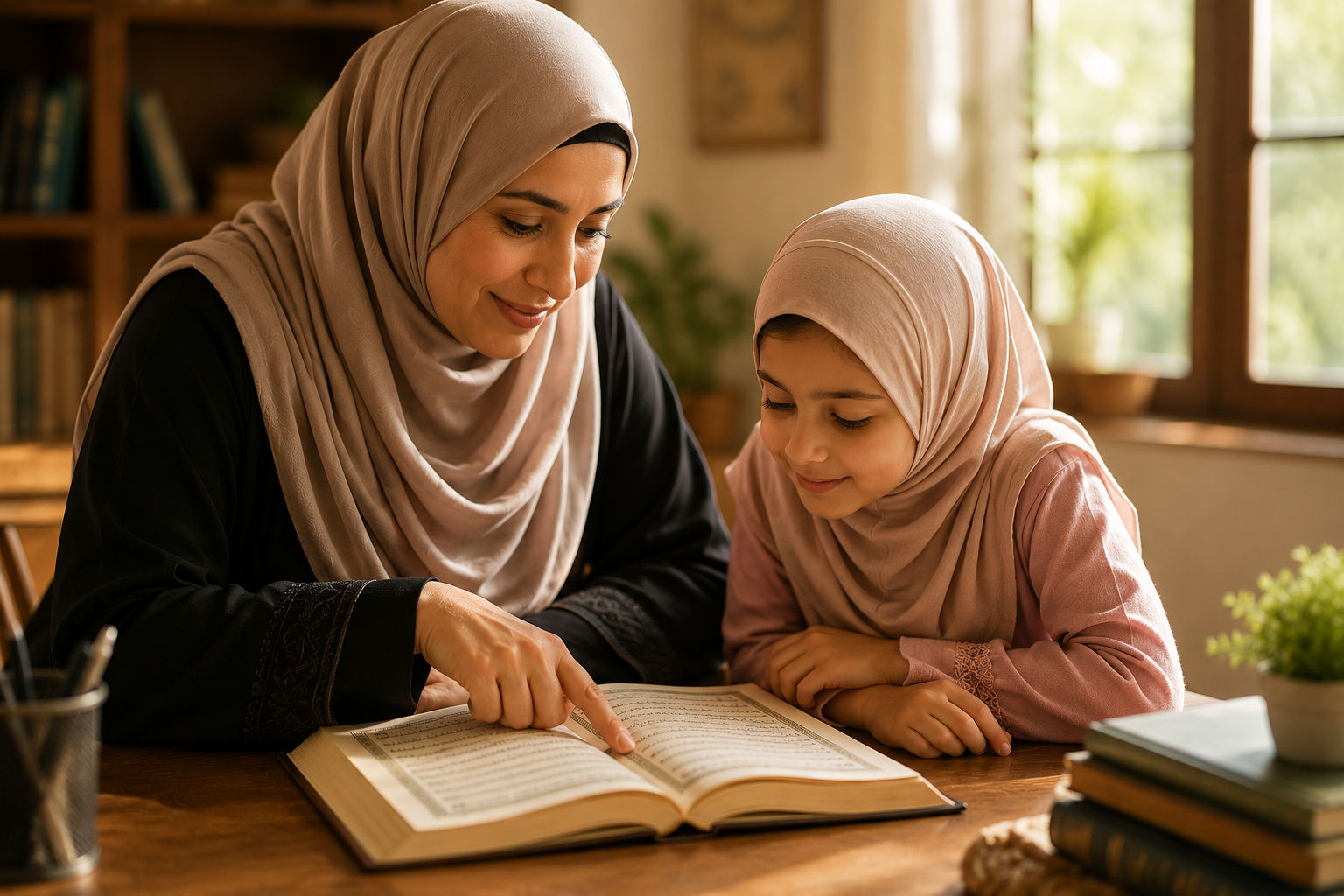
Why Allah Commands Beautiful Recitation
The importance of Tajweed is not a human invention. Allah Himself commanded the Prophet Muhammad ﷺ — and through him, all of us — to recite the Quran with care and beauty.
Allah says in Surah Al-Muzzammil (73:4):
"…and recite the Quran with measured recitation (tarteelan)."

The word used here — tarteel — carries a rich meaning. It refers to a calm, measured, beautiful recitation in which words flow clearly and distinctly, letters are given their full rights, and the reciter is fully present with what they are saying. This is not mere advice. It is a divine command.
The Prophet Muhammad ﷺ also emphasized this deeply. In a hadith narrated by Al-Bukhari and Muslim, he said:
"The one who is proficient in reciting the Quran will be with the noble, righteous scribes (angels), and the one who recites with difficulty, stammering or stumbling through its verses, will have two rewards."
Two things stand out in this hadith. First, the immense honour given to one who recites the Quran beautifully. Second — and this is often overlooked — the mercy extended to one who struggles. The Prophet ﷺ did not say that struggling reciters should stop. He said they receive double reward. The effort itself is honoured.
This tells us something profound about Islam's relationship with Tajweed: it is a path everyone can walk, regardless of where they begin.
Preserving the Words of Allah Across Fourteen Centuries
One of the most remarkable facts in all of human history is that the Quran has been recited in exactly the same way for over 1,400 years.
Not just the words — the sounds. The precise articulation of the letter qaaf from the back of the tongue. The soft nasalization that follows noon and meem in certain positions. The elongation of a vowel that lasts exactly two, four, or six counts depending on what follows it. All of this has been passed down, mouth to ear, teacher to student, in an unbroken chain stretching back to the Prophet Muhammad ﷺ himself.
This is what scholars call tawatur — a transmission so widespread and continuous that error or fabrication is impossible.
Tajweed is the living archive of that transmission.
When you learn Tajweed, you are not just learning pronunciation rules. You are connecting yourself to an unbroken lineage of reciters that reaches back to the beloved Prophet ﷺ, who learned from Jibreel (peace be upon him), who brought the Quran from Allah.
This is why the preservation of Tajweed has always been treated as a sacred responsibility by Muslim scholars, not just a scholarly exercise. Each generation that learned and taught Tajweed correctly helped ensure that the Quran reaching the next generation was the same Quran revealed to the last Prophet.
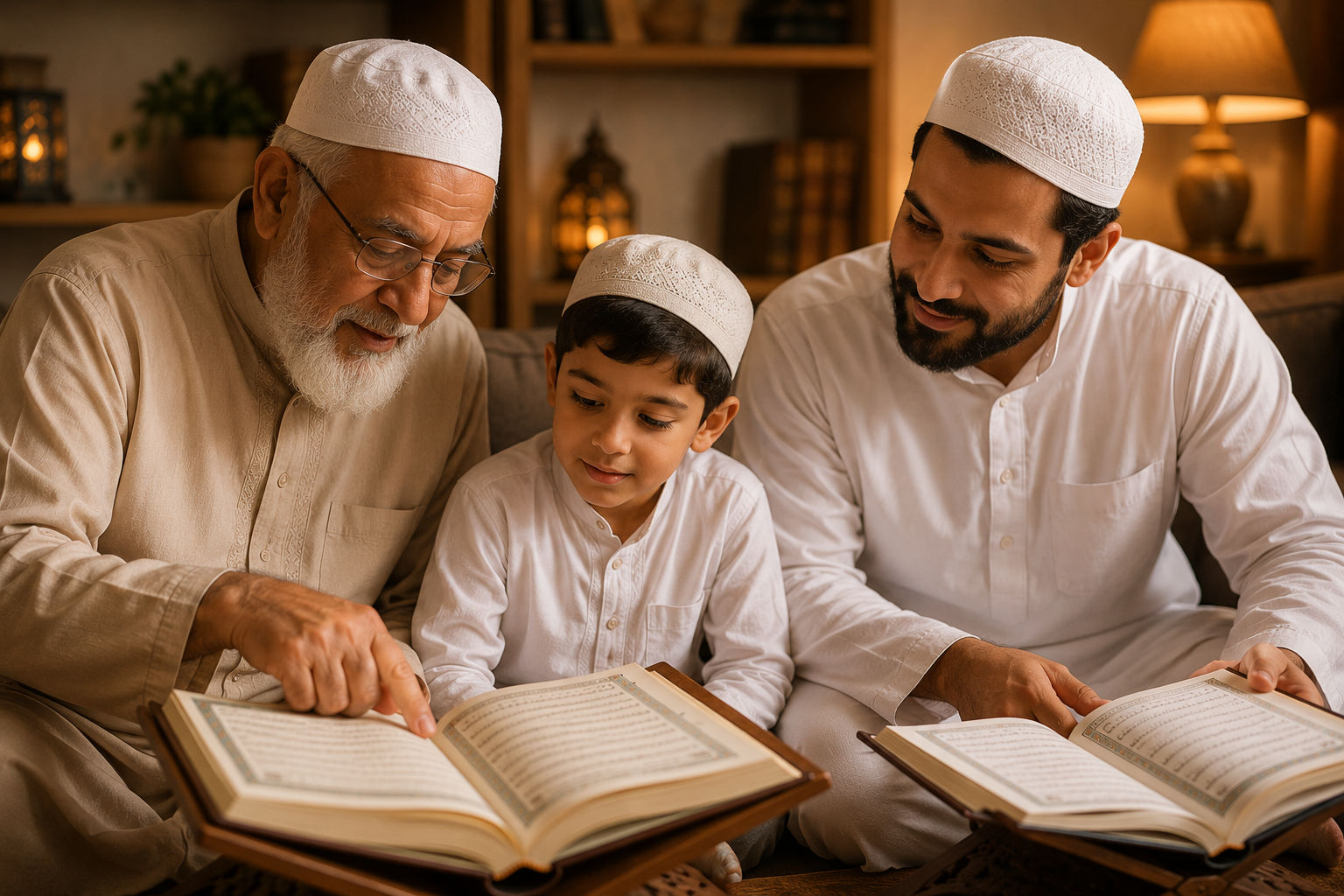
What Happens When Tajweed Is Neglected?
A natural question arises: does it really matter if someone mispronounces a letter or extends a vowel incorrectly? After all, the meaning is still understood, isn't it?
The scholars of Tajweed have a careful and important answer to this.
Mistakes in Quran recitation are divided into two categories:
1. Clear mistakes (al-lahn al-jaliyy): These are errors that change the meaning of a word or verse — such as mispronouncing a letter so that one word becomes another, or changing a vowel on a key word so that a noun becomes a verb or a negative becomes a positive. These kinds of mistakes are considered sinful to commit knowingly, because they alter the meaning of Allah's speech.
2. Hidden mistakes (al-lahn al-khafiyy): These are errors in Tajweed rules — like failing to observe a required nasalization, or shortening a vowel that should be lengthened. These do not change the meaning of the words, but they do affect the beauty and correctness of the recitation. Scholars consider it disliked (makrooh) to recite this way when one is able to do better.
The famous Islamic scholar Ibn Al-Jazari — one of the greatest authorities on Tajweed in Islamic history — wrote:
"Applying Tajweed is a matter of absolute necessity; whoever does not apply it in the Quran is a sinner."
This might sound severe, but it is important to understand the context. This applies to one who is able to apply Tajweed and chooses not to. For someone who is genuinely trying and making effort, the Prophet's ﷺ promise of double reward applies.
The takeaway is this: learning Tajweed is not optional for those who can learn it. It is part of honouring the Quran.
The Difference Between Reading the Quran and Reciting It
Here is something worth sitting with.
There is a difference between reading the Quran and reciting it.
You can read a text the way you read a shopping list — quickly, functionally, moving through words without dwelling in them. Many Muslims, particularly those who did not learn Tajweed properly, develop exactly this kind of relationship with the Quran. They read it to finish it. They rush through Juz Amma to complete their daily portion. The words move past their eyes and lips without settling anywhere.
Tajweed changes this completely.
When you recite with Tajweed, every word slows to its natural pace. Each letter insists on being heard correctly. You cannot rush a madd — a lengthened vowel — without breaking the rule. You cannot swallow a ghunnah — the nasal resonance — without losing something beautiful. The rules of Tajweed are, in a sense, the Quran's own insistence that you pay attention.
And when you pay attention, something remarkable happens. You start to hear the Quran.
You notice the way Allah addresses the Prophet ﷺ in Surah Ad-Duha with such gentleness. You feel the weight of the descriptions of Judgment Day in Surah Az-Zalzalah. You sense the joy in the opening of Surah Ash-Sharh. Tajweed does not just improve the sound of your recitation — it opens the door to deeper meaning, deeper emotion, and deeper connection with Allah's words.
How Tajweed Deepens Spiritual Connection
The Quran was not revealed to be an academic subject. It was revealed to transform hearts.
Allah says in Surah Al-Isra (17:9):
"Indeed, this Quran guides to that which is most suitable and gives good tidings to the believers who do righteous deeds that they will have a great reward."
But for the Quran to guide, it must be received — and received deeply. The scholars speak of khushu' — that quality of humble, focused presence in worship. Tajweed is one of the most powerful pathways to khushu' in recitation.
When your recitation is correct and beautiful, several things happen spiritually:
Your focus deepens. Because you are attending to every letter and rule, your mind cannot wander. Tajweed is, in a very real sense, a mindfulness practice built into the Quran itself.
Your emotional response grows. The cadences of proper recitation — its rises and falls, its pauses and flows — carry emotional weight that sloppy recitation simply cannot.
Your reverence increases. There is a profound difference between how you hold something you've worked hard to perfect and something you've treated casually. Mastering Tajweed cultivates reverence for the Quran.
Your prayers transform. For Muslims who recite Quran in salah, improving Tajweed doesn't just improve how they sound — it transforms the entire prayer experience from a ritual into a conversation with Allah.
Common Misconceptions About Tajweed — Gently Addressed
"Tajweed Is Only for Scholars and Huffaz"
This is perhaps the most common misconception, and it holds many sincere Muslims back from ever beginning.
Tajweed is an obligation on every Muslim who recites the Quran — not a specialty reserved for the advanced. The basic rules of Tajweed that prevent meaning-changing errors are accessible to everyone. Advanced aspects of Tajweed, yes, require deeper study — but the foundational layer is something any motivated adult or child can learn with a qualified teacher.
"I Am Too Old to Learn Tajweed"
There is no age limit in the pursuit of knowledge. The Prophet ﷺ said: "Seek knowledge from the cradle to the grave." Countless adults have begun learning Tajweed in their thirties, forties, fifties, and beyond — and have found it one of the most rewarding journeys of their lives. The learning may take longer as an adult, but it is absolutely possible, and the reward is immense.
"Good Pronunciation Doesn't Really Matter"
As discussed above, this depends entirely on the type of mistake. Meaning-changing errors do matter — deeply. And even non-meaning-changing errors matter in terms of beautifying the recitation and fulfilling the divine command of tarteel. Saying pronunciation doesn't matter is a bit like saying it doesn't matter how you address a king — technically you can still be understood, but something important is being missed.
"Children Can Learn Tajweed Later"
In fact, the opposite is true. Children learn Tajweed more easily than adults. Their brains are still forming the neural pathways for language, making it far easier for them to acquire correct pronunciation habits. The patterns they establish in childhood will stay with them for life. Waiting until they are teenagers means they may need to unlearn years of incorrect pronunciation before they can build the right habits — which is significantly harder.
Why Children Benefit Enormously From Learning Tajweed Early
There is something quietly extraordinary about a child who has been taught to recite the Quran with proper Tajweed from a young age.
Watch them in prayer. Watch them during Ramadan. Watch them at a family gathering when someone asks for Quran to be recited. There is a confidence, a natural ease, a beautiful dignity in how they hold those words.
But the benefits go far beyond performance:
Stronger memorization. Tajweed provides a musical and rhythmic structure that makes Quran memorization significantly easier. Children who learn Tajweed alongside their memorization tend to retain surahs more accurately and for longer.
Better Arabic pronunciation overall. Tajweed is built on mastery of Arabic phonetics. Children who learn it early develop a strong Arabic accent that benefits their Arabic language learning as well.
Lifelong habits. Correct recitation habits formed in childhood become second nature. They require no conscious effort later in life — the child simply recites correctly, automatically.
Spiritual identity. When a child grows up with a beautiful, confident relationship with the Quran, that relationship becomes a core part of who they are. It is one of the most precious gifts a parent can give.
How Adults Can Learn Tajweed — A Gentle Encouragement
If you are an adult who has never learned Tajweed, or who learned it imperfectly and wants to improve, know this: the door is wide open, and the journey is worth it.
Here is what beginning looks like for most adult learners:
Start with the basics. You do not need to learn all the rules of Tajweed at once. Begin with the letters — are you pronouncing each Arabic letter correctly? Many adult learners discover that just this first layer of correction makes an enormous difference in their recitation.
Find a qualified teacher. This is non-negotiable. Tajweed cannot be learned from a book alone. It is a transmitted oral science — it must be heard and corrected in real time. A teacher who can listen to you recite and identify your specific errors is invaluable.
Be patient with yourself. You may have been pronouncing certain letters incorrectly for decades. Your mouth may resist new positions and sounds. This is completely normal. With patient, consistent practice, your articulation will shift.
Celebrate small wins. The day you correctly produce the ain (ع) sound for the first time — celebrate it. The day you hold a madd for its full count without thinking about it — celebrate it. Progress in Tajweed is cumulative and deeply satisfying.
The Most Common Tajweed Mistakes (And Why They're Fixable)
Most beginners make the same handful of mistakes. Understanding them can help you know what to focus on:
1. Confusing Similar-Sounding Letters
Arabic has letters that sound similar to non-native speakers but are actually very different — saad (ص) and seen (س), dhaad (ض) and daal (د), haa (ح) and ha (ه). Mixing these up is one of the most common errors, and it can sometimes change meaning.
2. Shortening Long Vowels
Arabic has short and long vowels, and the distinction is meaningful in Tajweed. Many beginners shorten long vowels (madd) to the same length as short ones, losing the rule entirely without realizing it.
3. Missing the Ghunnah
The ghunnah — a two-count nasal sound that accompanies certain rules — is frequently missed by beginners. It adds a distinct quality to recitation that should be clearly audible.
4. Stopping in the Wrong Place
The Quran has its own system of stopping signs (waqf marks) that guide where the reciter should pause. Stopping in the wrong place can change or obscure meaning. Beginners often pause based on breath rather than meaning.
5. Rushing
Perhaps the most universal mistake across all levels. Tajweed requires a measured pace — the tarteel that Allah commanded. Rushing prevents every other rule from being applied correctly.
All of these mistakes are fixable with proper instruction and practice.
Learning Tajweed in the Modern World
One of the most significant developments for Quran education in recent times is the rise of high-quality online Tajweed instruction.
For much of history, learning Tajweed required access to a qualified sheikh or teacher — often unavailable in Western countries or smaller communities. Today, that barrier has largely been removed. A student in London, Lagos, or Los Angeles can now sit down with a qualified Tajweed teacher in Egypt, Jordan, or Saudi Arabia for a one-to-one lesson — and receive the same quality of personalised instruction that was once available only to those in traditional centres of Islamic learning.
This matters enormously, because Tajweed is not a subject that benefits from passive learning. It requires:
Live recitation and correction — you must recite aloud and be corrected in real time
Personalised feedback — every student makes different errors; a good teacher identifies yours specifically
Consistent practice — short, regular sessions build better habits than occasional long ones
Encouragement — progress in Tajweed can feel slow; a compassionate teacher keeps students motivated
Online one-to-one Tajweed classes provide all of this. When combined with modern tools — lesson recordings you can review, visual aids for articulation points, progress tracking — online Tajweed learning can be remarkably effective.
At Araby Academy, our Tajweed teachers are qualified instructors with years of experience teaching students across all levels and ages. Whether you are a complete beginner who has never studied the rules of recitation, a parent enrolling your child for the first time, or a more advanced student seeking to refine specific aspects of your recitation — our teachers will meet you exactly where you are, and guide you forward with patience, expertise, and genuine care.

Practical Tips for Improving Your Tajweed
Whether you are just beginning or looking to improve, here are concrete steps you can take:
1. Learn With a Qualified Teacher
This is the single most important step. Do not attempt to learn Tajweed entirely from YouTube videos or apps. These can supplement your learning, but they cannot replace live correction.
2. Listen to Master Reciters
Immerse yourself in the recitations of great Quran reciters. Regularly recommended include Sheikh Mahmoud Khalil Al-Husary — known particularly for his clear, measured recitation ideal for Tajweed study — as well as Sheikh Abdul Basit Abdul Samad, Sheikh Mishary Rashid Alafasy, and Sheikh Saud Al-Shuraim. Listen actively, not just as background audio.
3. Practice Daily in Small Sessions
Fifteen minutes of focused daily practice is worth more than two hours once a week. Consistency is the key to building muscle memory in your mouth and throat.
4. Record Yourself
Recording your own recitation and listening back is one of the most powerful tools available to Tajweed learners. Errors that escape your notice while reciting become obvious when you listen to yourself. Many students find this uncomfortable at first — and then find it transformative.
5. Focus on Progress, Not Perfection
The Prophet ﷺ reminded us that the struggling reciter has two rewards. Do not allow the pursuit of perfect Tajweed to become a source of anxiety. Approach it with the spirit of a sincere student offering their best to Allah, and let the improvement come naturally over time.
6. Apply What You Learn in Your Daily Prayers
Do not compartmentalize Tajweed as a "lesson subject." Bring what you are learning directly into your salah. Even imperfect application in prayer is infinitely better than saving it only for formal recitation sessions.
A Note to Parents: The Most Lasting Gift
If you are a parent reading this, the most important thing you can do for your child's Quran journey is to start early and stay consistent.
Children who begin Tajweed alongside their Quran reading do not experience it as a burden — because they have never known any other way. Correct recitation simply becomes how they recite. They grow into teenagers and adults who carry the Quran in their mouths with beauty and ease — and this, inevitably, becomes part of how they carry it in their hearts.
Enrolling your child in structured, personalized Tajweed classes with a caring teacher is one of the most spiritually meaningful investments you can make in their future.
FAQs About Tajweed
Q1: Is learning Tajweed obligatory (fard) for every Muslim?
Scholars generally hold that it is fard kifayah (a communal obligation) for the recitation of the Quran to be preserved correctly — meaning the Muslim community as a whole must maintain this knowledge. For individuals, the basic rules that prevent meaning-changing errors are considered obligatory to observe. The deeper rules of beautification are highly recommended. If you have access to proper instruction, making the effort to learn is certainly the right thing to do.
Q2: How long does it take to learn Tajweed?
There is no single answer to this. A student with a good teacher who practices consistently can learn the foundational rules of Tajweed within several months. Reaching a level of proficiency where the rules are applied naturally during recitation typically takes one to two years of regular study. Mastery — where Tajweed becomes second nature across the entire Quran — is a lifelong refinement. Most students find that they are making meaningful improvements within their first few weeks of proper instruction.
Q3: Can I learn Tajweed online?
Absolutely, and many students find online one-to-one instruction highly effective. The key is working with a qualified teacher who can hear you recite and provide real-time correction. Video lessons make this entirely possible. Ensure your teacher is a certified Tajweed instructor with experience in teaching your level.
Q4: My child is 5 years old. Is it too early to start Tajweed?
Not at all — in fact, this is an ideal age to begin. Very young children absorb correct pronunciation almost effortlessly. Starting at age 4–6, alongside learning the Arabic letters, is common practice in Islamic education. The earlier children develop correct recitation habits, the more naturally they will carry them through life.
Q5: I have been reciting the Quran for years without Tajweed. Is it too late to change?
It is never too late. Many adults who begin Tajweed lessons in middle age find the experience deeply moving — they often say they feel like they are meeting the Quran for the first time. Yes, it takes more effort to unlearn old habits than to form new ones. But the reward is worth every moment of that effort. Your Quran recitation can still become beautiful. The door is always open.
Q6: What is the difference between Tajweed and Tarteel?
Tarteel refers specifically to the measured, beautiful manner of recitation that Allah commands in Surah Al-Muzzammil. Tajweed is the system of rules that enables tarteel. You could say that Tajweed is the method, and tarteel is the result. When you apply the rules of Tajweed consistently, you are reciting with tarteel — as Allah commanded.
Q7: Does Tajweed apply to Arabic speakers as well?
Yes. Even native Arabic speakers are not automatically proficient in Tajweed. Modern spoken Arabic dialects differ significantly from Classical Quranic Arabic in phonetics. Many Arab students require formal Tajweed instruction to learn the precise articulation points and rules that govern Quran recitation. Tajweed is a specialized knowledge, not simply fluency in Arabic.
Conclusion: Tajweed as a Lifelong Gift
We began with a moment — that moment when a person hears the Quran recited with proper Tajweed and something in them stops, and listens, and feels.
That moment is not accidental. It is the Quran reaching across the centuries, carried on the breath of a reciter who learned from a teacher who learned from a teacher, all the way back to the Prophet ﷺ. It is the sound of careful preservation, of love for Allah's words, of generations of Muslims who believed that this was worth doing perfectly.
Tajweed is not a burden. It is a trust. It is a gift that Allah placed within the science of recitation, waiting for each of us to discover it.
When you learn Tajweed, you are not just improving your pronunciation. You are joining something ancient and beautiful. You are saying, with your effort and your practice and your willingness to learn: I want to give the Quran what it deserves.
And what begins as a technical journey — learning where to place your tongue, how long to hold a vowel, when to nasalize a sound — becomes, over time, something much more intimate. It becomes the way you talk to Allah.
Begin today. Begin with curiosity instead of fear. Begin with patience instead of pressure. And know that every correct letter, every well-applied rule, every moment of focused recitation is registered with the One who revealed these words — and who, as He promised, is closer to you than your jugular vein.
Recite. Learn. Return to the Quran. It is always waiting for you.