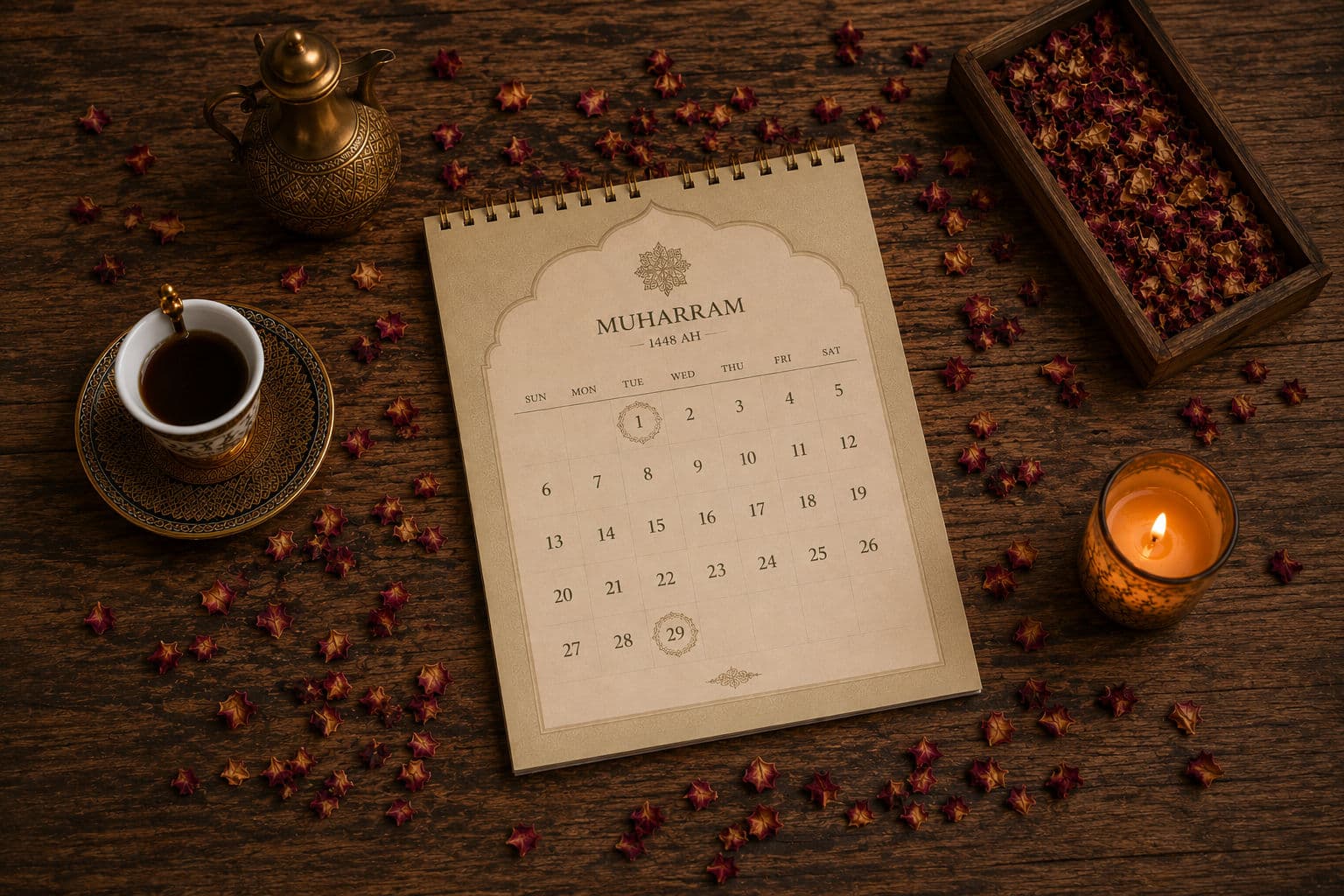
Every year, as the Islamic month of Muharram arrives, millions of Muslims around the world observe a special voluntary fast. They fast not out of obligation, but out of love — love for Allah, gratitude for His mercy, and connection to one of the most powerful stories in human history.
This day is called Ashura, and it falls on the 10th of Muharram, the first month of the Islamic lunar calendar.
If you've ever wondered why Muslims fast on Ashura, what its roots are, and what spiritual rewards it holds — you've come to the right place. In this comprehensive guide, we'll explore the meaning of Ashura, its deep historical connection to the Prophet Musa (Moses, peace be upon him), how Prophet Muhammad ﷺ responded when he learned about it, and how your family can observe this blessed day together.
Whether you're a new Muslim, a Muslim parent raising children with Islamic values, or simply someone who wants to deepen their knowledge — this article is for you.
What Is Ashura? Understanding the Day and Its Place in Islam
The Meaning of the Word "Ashura"
The word Ashura (عاشوراء) comes from the Arabic root ʿashr, meaning ten. It simply refers to the tenth day of the month — in this case, the tenth day of Muharram (مُحَرَّم), the first month of the Islamic Hijri calendar.
So "Ashura" literally means "the tenth," and the day carries enormous spiritual weight precisely because of what happened on this date in history.
The Importance of Muharram in Islam
Before we can fully understand Ashura, we need to appreciate the month in which it falls.
Muharram is one of the four sacred months in Islam — the others being Dhul-Qa'dah, Dhul-Hijjah, and Rajab. Allah mentions these sacred months in the Quran:
إِنَّ عِدَّةَ الشُّهُورِ عِندَ اللَّهِ اثْنَا عَشَرَ شَهْرًا فِي كِتَابِ اللَّهِ يَوْمَ خَلَقَ السَّمَاوَاتِ وَالْأَرْضَ مِنْهَا أَرْبَعَةٌ حُرُمٌ
"Indeed, the number of months ordained by Allah is twelve — in Allah's Record since the day He created the heavens and the earth — of which four are sacred." — Surah At-Tawbah (9:36)
Muharram's name itself means "forbidden" or "sacred" — warfare was traditionally prohibited in this month, and good deeds carried extra weight. The Prophet ﷺ called Muharram "the month of Allah" (Shahru Allah), which is a tremendous honor given to no other month except Ramadan.
In an authentic narration, he ﷺ said:
"The best fasting after Ramadan is the month of Allah, Muharram." — (Sahih Muslim, 1163)
This establishes Muharram as an entire month of elevated spiritual opportunity — and Ashura sits at its peak.
The Story Behind Ashura — Prophet Musa and the Exodus
This is the heart of Ashura — a story of faith, tyranny, divine rescue, and eternal gratitude.

Pharaoh's Oppression — A Civilization Built on Injustice
Thousands of years ago, the Children of Israel — the followers of Prophet Ya'qub (Jacob, peace be upon him) — had settled in Egypt. Over time, they fell under the rule of a tyrannical Pharaoh who reduced them to slavery and subjected them to severe oppression.
The Quran describes this with striking clarity:
إِنَّ فِرْعَوْنَ عَلَا فِي الْأَرْضِ وَجَعَلَ أَهْلَهَا شِيَعًا يَسْتَضْعِفُ طَائِفَةً مِّنْهُمْ يُذَبِّحُ أَبْنَاءَهُمْ وَيَسْتَحْيِي نِسَاءَهُمْ ۚ إِنَّهُ كَانَ مِنَ الْمُفْسِدِينَ
"Indeed, Pharaoh exalted himself in the land and made its people into factions, oppressing a sector among them, slaughtering their sons and keeping their women alive. Indeed, he was of those who cause corruption." — Surah Al-Qasas (28:4)
He killed their sons, enslaved their people, and claimed divinity for himself. This was a society drowning in injustice — and it was into this world that Allah sent His prophet.
Prophet Musa (AS) — The Man Raised to Confront a Tyrant
Prophet Musa (Moses, peace be upon him) was born during Pharaoh's campaign to exterminate Israelite boys. By Allah's miraculous protection, he survived and was raised in Pharaoh's own palace — an irony that only divine wisdom could engineer.
When Musa reached adulthood, Allah called to him from a blessed tree in the valley of Tuwa and appointed him as a prophet with a mission: deliver the Children of Israel from Pharaoh's grip and call him to worship the One God.
Allah says in the Quran:
اذْهَبَا إِلَىٰ فِرْعَوْنَ إِنَّهُ طَغَىٰ
"Go, both of you, to Pharaoh. Indeed, he has transgressed." — Surah Ta-Ha (20:43)
Musa (AS) went to Pharaoh with signs and miracles. His staff turned into a serpent. His hand shone with light. The court magicians, who were summoned to discredit him, witnessed the truth and prostrated in faith — an act of courage that cost many of them their lives.
But Pharaoh refused. His arrogance was too great. His investment in his own power too deep.
The Plagues and the Final Showdown
Allah sent a series of afflictions upon Egypt — floods, locusts, lice, frogs, and blood. Each time, Pharaoh begged Musa (AS) for relief, promised to let the Children of Israel go, and then broke his word. His heart had been hardened by decades of unchecked power.
Finally, Allah commanded Musa (AS) to lead the Children of Israel out of Egypt at night. What followed was one of the most dramatic moments in all of human history.
The Parting of the Sea — Allah's Ultimate Rescue
With Pharaoh's army thundering behind them and the sea stretching before them, the Children of Israel were trapped. Terror gripped the crowd.
فَلَمَّا تَرَاءَى الْجَمْعَانِ قَالَ أَصْحَابُ مُوسَىٰ إِنَّا لَمُدْرَكُونَ
"And when the two companies saw each other, the companions of Musa said, 'Indeed, we are to be overtaken!'" — Surah Ash-Shu'ara (26:61)
The people panicked. But Musa (AS) stood firm, his trust in Allah unshakable:
قَالَ كَلَّا ۖ إِنَّ مَعِيَ رَبِّي سَيَهْدِينِ
"He said, 'No! Indeed, with me is my Lord; He will guide me.'" — Surah Ash-Shu'ara (26:62)
Allah commanded Musa (AS) to strike the sea with his staff. The water parted — forming towering walls on either side — and the Children of Israel walked across on dry ground.
Pharaoh, in his blind arrogance, pursued them into the parted sea. When the Children of Israel had safely crossed, the waters closed in on Pharaoh and his army. He was drowned — and in his final moments, he declared his belief. But it was too late.
وَجَاوَزْنَا بِبَنِي إِسْرَائِيلَ الْبَحْرَ فَأَتْبَعَهُمْ فِرْعَوْنُ وَجُنُودُهُ بَغْيًا وَعَدْوًا ۖ حَتَّىٰ إِذَا أَدْرَكَهُ الْغَرَقُ قَالَ آمَنتُ أَنَّهُ لَا إِلَـٰهَ إِلَّا الَّذِي آمَنَتْ بِهِ بَنُو إِسْرَائِيلَ وَأَنَا مِنَ الْمُسْلِمِينَ
"And We took the Children of Israel across the sea, and Pharaoh and his soldiers pursued them in tyranny and enmity until, when drowning overtook him, he said, 'I believe that there is no deity except that in whom the Children of Israel believe, and I am of the Muslims.'" — Surah Yunus (10:90)
This Happened on Ashura — the 10th of Muharram
According to authentic narrations, this monumental rescue — Allah saving Musa and the Children of Israel, and drowning Pharaoh — occurred on the 10th of Muharram. In gratitude, Musa (AS) fasted this day to thank Allah.
And this is the very reason Muslims fast on Ashura to this day.
Lessons for Modern Muslims
The story of Musa (AS) and Pharaoh isn't just ancient history — it's a living lesson:
Truth always outlasts tyranny. Pharaoh's empire crumbled; Musa's message endures.
Allah's help comes when least expected. The sea parted at the edge of disaster.
Faith must be expressed through action. Fasting on Ashura is an act of living gratitude.
Why Did Prophet Muhammad ﷺ Fast on Ashura?

When the Prophet Muhammad ﷺ migrated to Madinah in the first year of Hijra, he encountered Jewish communities who observed a fast on the 10th of Muharram. This is recorded in one of the most important hadith related to Ashura:
Ibn Abbas (may Allah be pleased with him) narrated:
"When the Prophet ﷺ arrived in Madinah, he found the Jews observing the fast of Ashura. He ﷺ asked them, 'What is this?' They said, 'This is a righteous day — it is the day when Allah saved the Children of Israel from their enemy, so Musa fasted on this day.' The Prophet ﷺ said, 'We have more right to Musa than you,' so he fasted on this day and commanded the Muslims to fast." — (Sahih Al-Bukhari, 2004; Sahih Muslim, 1130)
This hadith is extraordinary. The Prophet ﷺ didn't hesitate or debate — he immediately recognized the spiritual significance of the day, claimed the legacy of Musa (AS) as one belonging to Muslims, and embraced the fast.
"We Have More Right to Musa Than They Do"
This powerful statement — "Nahnu awlā bi Mūsā minhum" — is one of the most important declarations of Islamic theology. It reminds Muslims that:
Islam is not a new religion but the final form of the same message that Musa, Ibrahim, 'Isa, and all the prophets brought.
The stories of the Quran are not merely historical anecdotes — they are spiritual inheritance.
Gratitude to Allah for saving Musa (AS) is, for Muslims, an act of profound faith.
The Prophet ﷺ then intended to distinguish Muslim practice from others by fasting the 9th along with the 10th — a recommendation we'll explore in Section 5.
What Is the Reward for Fasting Ashura?
One of the most compelling reasons Muslims observe Ashura fasting is the enormous spiritual reward attached to it. The Prophet ﷺ described it clearly:
Abu Qatadah (may Allah be pleased with him) reported that the Prophet ﷺ was asked about fasting on Ashura. He said:
"It expiates the sins of the previous year." — (Sahih Muslim, 1162)
A single day of fasting — wiping away a year of minor sins. This is one of the greatest gifts Allah has given this Ummah (Muslim community).
Understanding "Expiation of Sins"
Islamic scholars clarify that this expiation refers to minor sins (saghā'ir), not major sins (kabā'ir). Major sins — such as shirk (associating partners with Allah), murder, or abandoning prayer — require sincere repentance (tawbah), which involves:
Stopping the sin immediately
Genuine remorse for having committed it
A firm intention never to return to it
(If it involves another person's rights) making amends or seeking their forgiveness
The expiation through fasting is a bonus — a divine mercy layered on top of the spiritual benefit of fasting itself. It does not make a believer complacent about their sins; rather, it motivates them to fast with humility and hope.
Comparing Ashura and Arafah Fasting
It's worth noting that fasting on the Day of Arafah (9th of Dhul Hijjah) expiates sins of two years — the previous year and the coming year. Scholars explain that Arafah is the greater day because it coincides with the central pillar of Hajj, while Ashura commemorates the rescue of an earlier nation. Both are tremendous gifts from Allah.
Additional Spiritual Benefits
Beyond the expiation of sins, fasting Ashura:
Strengthens tawakkul (trust in Allah): You fast in faith, just as Musa (AS) stood firm at the sea.
Connects you to a chain of prophets: You are performing an act of worship that Musa (AS) himself performed.
Trains the soul: Every voluntary fast purifies the heart and increases God-consciousness (taqwa).
Builds gratitude: You remember Allah's mercy and make it tangible through action.
Should Muslims Fast the 9th and 10th, or the 10th and 11th?
This is a question many Muslims ask, and the scholars of Islam have addressed it clearly based on authentic hadith.
The Prophet's ﷺ Intention to Differ from Other Communities
In the year before his death, the Prophet ﷺ said:
"If I am alive next year, I will fast the ninth (of Muharram) as well." — (Sahih Muslim, 1134)
He ﷺ intended to add the 9th of Muharram to distinguish Islamic practice from the practice of the Jewish communities who fasted only the 10th. This is an example of the Islamic principle of mukhalafah — maintaining a distinct Islamic identity.
The Prophet ﷺ passed away before the following Muharram, but scholars agree this expressed intention carries the weight of a Sunnah recommendation.
Fasting Options — A Practical Guide
Option | Days | Status | Recommendation |
|---|---|---|---|
Fast the 9th and 10th | Muharram 9–10 | Highly recommended | Most preferred — follows the Prophet's ﷺ expressed intention |
Fast the 10th alone | Muharram 10 | Valid Sunnah | Acceptable, earns full reward |
Fast the 10th and 11th | Muharram 10–11 | Permissible | Some scholars recommend this as an alternative to differ from others |
Fast 3 days (9th, 10th, 11th) | Muharram 9–10–11 | Permissible | Some scholars support this for maximum caution |
The most widely recommended practice based on the majority of scholars is to fast the 9th and 10th of Muharram.
If you only managed to fast the 10th, your fast is still valid and rewarded — do not worry. But if you have the opportunity, adding the 9th is the Prophet's ﷺ own preferred practice.
A Practical Note for Families
Mark your Islamic calendar at the beginning of Muharram. The 9th and 10th can sometimes fall mid-week, so it helps to plan ahead — especially for working adults and school-going children.
Lessons Muslims Can Learn from Ashura
The story of Ashura is not a fairy tale tucked away in ancient history. It is a living textbook of faith — and its lessons speak directly to the challenges Muslims face today.
1. Trust in Allah (Tawakkul)
When Musa (AS) stood at the edge of the sea with Pharaoh's army closing in, he said: "Indeed, with me is my Lord; He will guide me."
He had no plan. He had no contingency. He had only his Lord — and that was enough.
For modern Muslims: When facing job loss, illness, family crises, or any impossibility, Ashura reminds us that the One who parted the sea for Musa is the same Allah we call upon today. "Hasbunallahu wa ni'mal wakil" — "Allah is sufficient for us, and He is the best Disposer of affairs."
Practical takeaway: Use the days of Ashura to audit your relationship with tawakkul. Are you placing your trust in Allah first, or as a last resort?
2. Patience During Hardship (Sabr)
Musa (AS) spent years calling Pharaoh with patience, enduring rejection, threats, and ridicule. The Children of Israel endured generations of slavery. Rescue came — but it came in Allah's time, not theirs.
For modern Muslims: Patience is not passive. It is active, purposeful endurance. The Quran describes Allah's relationship with the patient:
إِنَّ اللَّهَ مَعَ الصَّابِرِينَ
"Indeed, Allah is with the patient." — Surah Al-Baqarah (2:153)
Reflection point: What hardship are you currently enduring? Can you reframe it as a test whose end is in Allah's hands?
3. Courage Against Oppression
Musa (AS) stood before the most powerful ruler of his time and said: "I am a messenger from the Lord of all worlds." He did not compromise truth to appease power.
For modern Muslims: Ashura is a reminder that speaking truth — in whatever form your life demands — is an act of worship. Whether it's speaking up against injustice at work, raising children with Islamic values in a secular environment, or simply wearing hijab with confidence — courage is part of faith.
Practical takeaway: Identify one area of your life where fear has caused you to compromise your values. Make a sincere dua asking Allah for the courage of Musa (AS).
4. Gratitude for Allah's Blessings (Shukr)
Musa (AS) didn't just sigh with relief after crossing the sea. He fasted — he turned gratitude into action. He made his thanksgiving tangible.
For modern Muslims: We live surrounded by blessings we rarely pause to acknowledge — health, family, shelter, faith. The fast of Ashura is an invitation to transform gratitude from a feeling into an act of worship.
وَإِذْ تَأَذَّنَ رَبُّكُمْ لَئِن شَكَرْتُمْ لَأَزِيدَنَّكُمْ
"And [remember] when your Lord proclaimed, 'If you are grateful, I will surely increase you [in favor].'" — Surah Ibrahim (14:7)
Reflection point: Write down three blessings you've been taking for granted. Fast Ashura as a living expression of gratitude for them.
5. Hope During Difficult Times
The greatest lesson of Ashura may be this: no situation is so desperate that Allah cannot reverse it in a moment.
The Children of Israel were on the edge of annihilation. Pharaoh had the armies, the weapons, the empire. And in one divine command — the sea parted.
For the global Muslim community: At times when Muslims face hardship, discrimination, or loss on a global scale, Ashura is a reminder that our stories don't end in defeat. History has shown, again and again, that truth outlasts tyranny.
Common Misconceptions About Ashura
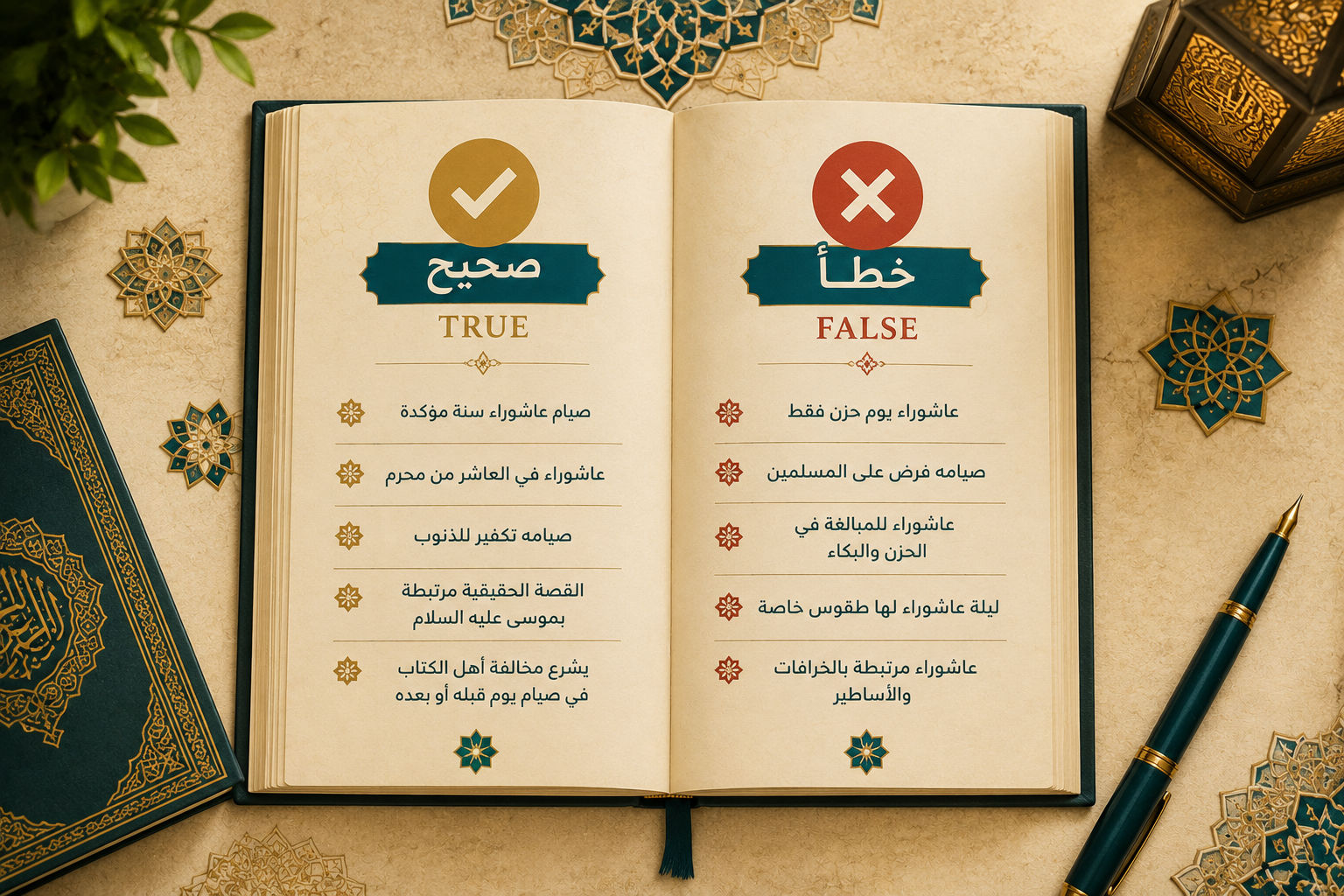
It is important to address certain practices and beliefs that have become associated with Ashura in some parts of the Muslim world, but which have no authentic basis in Islamic teaching.
Misconception 1: Ashura Is a Day of Mourning
In some cultural traditions, Ashura is observed as a day of intense mourning, self-harm, or public lamentation — particularly around events related to the martyrdom of Husayn ibn Ali (may Allah be pleased with him) at Karbala.
It is important to note that the martyrdom of Husayn (RA) is a tragedy that deeply saddens every Muslim's heart. However, the practice of self-flagellation, chest-beating, or public mourning rituals is not supported by authentic Islamic evidence and goes against the Prophet's ﷺ own prohibition of such acts.
The Prophet ﷺ said:
"He is not one of us who slaps his cheeks, tears his clothes, and cries with the cry of the days of ignorance." — (Sahih Al-Bukhari, 1294)
The authentic Sunnah of Ashura is fasting — an act of gratitude and worship — not grief performances.
Misconception 2: Special Foods Must Be Prepared
In certain cultures, it is traditional to prepare special meals or sweets on Ashura, believing this to be Islamically recommended. There is no authentic hadith supporting the preparation of specific foods for Ashura. While sharing food with neighbors and the needy is always praiseworthy, making it specifically tied to Ashura as a ritual has no basis.
Misconception 3: Ashura Is Specifically About Karbala
While the events of Karbala occurred on the 10th of Muharram (61 AH), the significance of Ashura in Islamic law predates Karbala by decades. The Prophet ﷺ established the fast of Ashura before the events of Karbala, based on the story of Musa (AS). Conflating the two or redefining Ashura as primarily about Karbala misrepresents the authentic Islamic position.
Misconception 4: Fabricated Virtues of Ashura
Several narrations circulating online and in some books claim specific virtues for Ashura beyond what is established — such as that it is the day Adam (AS) was created, the day the Ark of Nuh (Noah) rested, or that specific prayers on this day have guaranteed results. These narrations are weak or fabricated and should not be relied upon. Muslims should stick to what is authentically established.
The authentic virtues of Ashura are sufficient and immense — there is no need to add to them.
Section 8: How Families Can Observe Ashura Together
<!-- IMAGE 8 --> <!-- Placement: Opening of Section 8 --> <!-- Alt text: A family gathered around a table with Islamic books, dates, and craft activities for children, observing Ashura together at home --> <!-- AI Image Prompt: A warm, inviting top-down view of a family activity table: Islamic children's books open showing illustrations of the sea parting story (no prophet faces), art supplies including crayons and paper, a small bowl of dates, a glass of water, soft golden home lighting, cozy wooden table, family-friendly Islamic educational atmosphere, no adult faces visible, warm amber and teal colors -->
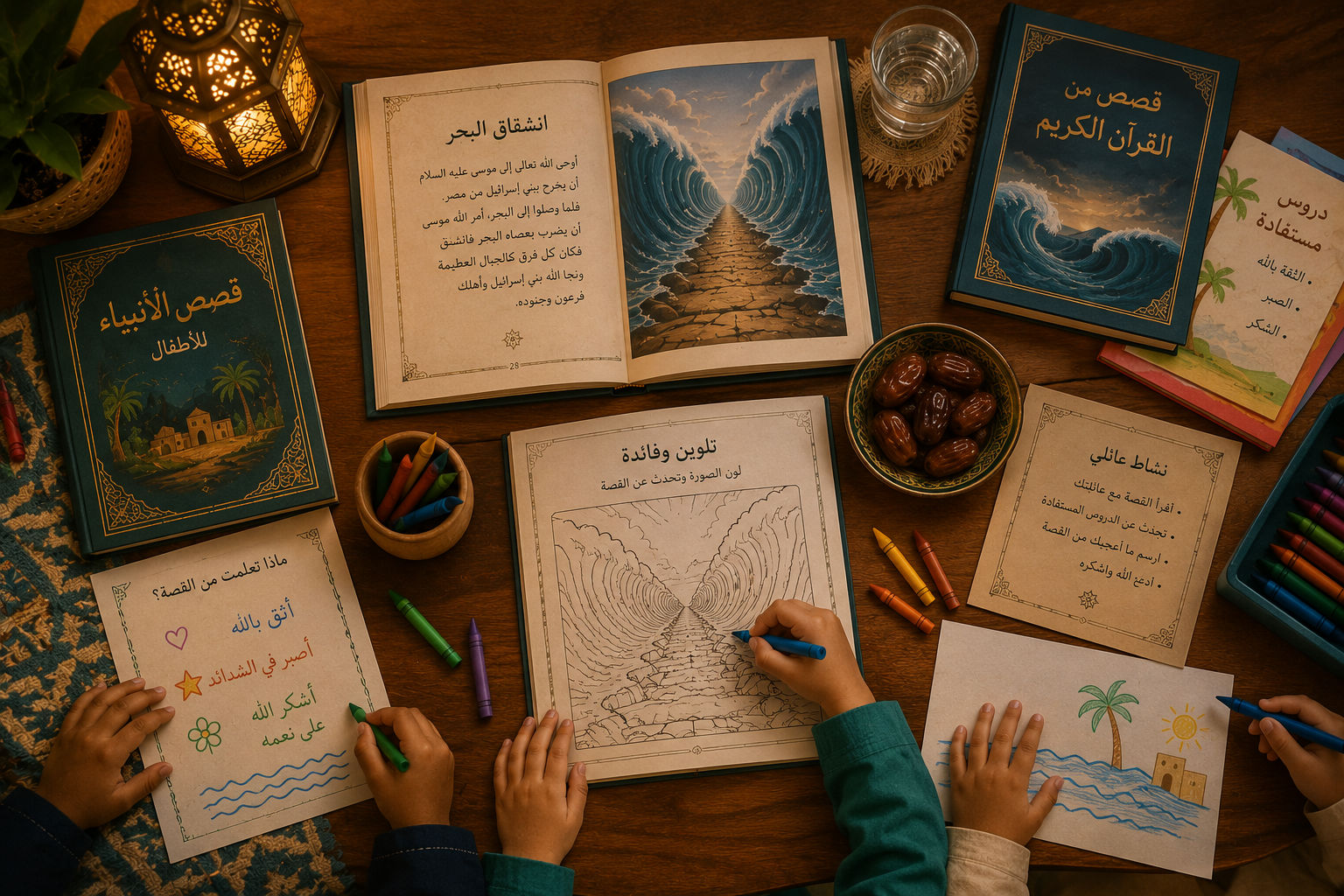
Ashura is not just a personal act of worship — it's a beautiful opportunity to build shared Islamic memory as a family. Here are practical, meaningful ways to observe the day together.
1. Observe the Fast Together
Encourage family members who are able to fast to do so. Even older children can try fasting part of the day, or fast until Dhuhr (midday prayer) as a practice run. Make suhoor (pre-dawn meal) a family moment — gather, make dua together, and set the intention.
2. Tell the Story of Prophet Musa (AS)
Sit together after Maghrib or after Iftaar and narrate the story of Musa and Pharaoh. Use a child-appropriate storybook if available, or tell it in your own words. Ask children questions:
"What would you have done standing at the sea?"
"Why do you think Musa wasn't afraid?"
"What does this story tell us about trusting Allah?"
3. Read Relevant Quran Together
Read Surah Al-Qasas (Chapter 28) or Surah Ash-Shu'ara (Chapter 26) together — they contain the full story of Musa (AS). Even reading just a few ayahs and discussing them is deeply valuable.
4. Practice Gratitude as a Family Activity
Give each family member a small card. Ask them to write or draw three blessings Allah has given them. Share around the table. This turns Ashura into a lived experience of shukr (gratitude).
5. Give Sadaqah (Charity)
Ashura is a perfect day to give charity. Whether it's sponsoring an orphan, donating to a food bank, or simply giving your children some money to donate — acts of generosity on this day honor the spirit of gratitude that defines it.
6. Make Dua for the Muslim Ummah
Just as Musa (AS) prayed for his people, use Ashura to make sincere dua for Muslims everywhere who are suffering. Teach your children to connect their hearts to the global Muslim community through dua.
7. Watch or Listen to an Islamic Lecture
Many scholars give special talks about Ashura and the story of Musa (AS). Find one together and listen as a family, pausing to discuss key points.
Section 9: Frequently Asked Questions About Ashura

1. Is fasting on Ashura mandatory (fard)?
No. Fasting on Ashura is highly recommended (Sunnah mu'akkadah) — not obligatory. The obligatory fast is only Ramadan. However, given the enormous reward attached to Ashura fasting (expiation of a year's minor sins), missing it without reason is a significant loss.
2. Can I fast only the 10th of Muharram?
Yes. Fasting only the 10th is valid and rewarded. However, the recommended practice is to also fast the 9th of Muharram alongside it, following the Prophet's ﷺ expressed intention.
3. What if I didn't know it was Ashura until partway through the day?
If you haven't eaten yet and it's still before Dhuhr (midday prayer), some scholars say you may form an intention to fast and it will count. If you have already eaten, you cannot make up that day as Ashura specifically — but you may fast voluntarily on other days.
4. Can children fast on Ashura?
Young children are not required to fast. However, older children (pre-teens and teenagers) can be encouraged to fast as a practice of ibadah (worship), with parental supervision. Children who cannot fast the full day can try fasting until midday or participate in the day's activities in other meaningful ways.
5. Is Ashura mentioned in the Quran?
The word "Ashura" does not appear in the Quran. However, the story of Musa (AS) and the crossing of the sea — the event that gives Ashura its significance — is mentioned extensively throughout the Quran in Surahs Al-Baqarah, Al-A'raf, Yunus, Ta-Ha, Ash-Shu'ara, and Al-Qasas.
6. What is the significance of Ashura for Shia Muslims?
For Shia Muslims, Ashura primarily commemorates the martyrdom of Husayn ibn Ali (may Allah be pleased with him) at the Battle of Karbala in 61 AH. This is a deeply emotional occasion. Sunni Muslims acknowledge the tragedy of Karbala but focus Ashura observance on the authenticated Sunnah of fasting.
7. Can women in their menstrual cycle get the reward of Ashura?
Women who are unable to fast due to their menstrual cycle are excused and do not sin. They can observe Ashura through other acts of worship such as dhikr (remembrance of Allah), reading Quran, giving charity, and engaging in reflection. They may make up the fast later, though scholars differ on whether a make-up fast carries the same specific Ashura reward.
8. Does fasting Ashura forgive major sins?
No. The hadith specifically refers to expiation of minor sins. Major sins require sincere repentance (tawbah). However, if someone fasts Ashura with a sincere heart and also makes tawbah for major sins, Allah in His infinite mercy may forgive them through His grace (fadl).
9. Is there a specific dua (supplication) for Ashura?
There is no specific dua reported in authentic hadith that is unique to Ashura. However, the day should be filled with general ibadah: dua, dhikr, Quran recitation, and worship. Some weak or fabricated specific prayers have circulated — avoid these and stick to general worship.
10. What if Ashura falls on a Saturday?
Some scholars have discussed that fasting on Saturday alone (without other days) may be discouraged, given a hadith about singling out Saturday for fasting. However, since the Ashura fast is a confirmed Sunnah, most scholars hold that fasting the 9th and 10th (or 10th and 11th) resolves this concern entirely.
11. Can I fast Ashura if I have missed days from Ramadan?
Yes, according to the majority of scholars, you may fast Ashura even if you have missed Ramadan days. The missed Ramadan days (qadha) can be made up later. However, some scholars recommend prioritizing the Ramadan make-up fasts first. Consult a scholar if you're unsure.
12. Does fasting Ashura require a specific niyyah (intention)?
Yes. As with all acts of worship in Islam, intention is required. You should make the intention to fast the 10th of Muharram (Ashura) for the sake of Allah. The intention does not need to be verbal — it is an internal resolution of the heart, but saying it aloud is also fine.
13. Is there a particular time to break the fast on Ashura?
No. The fast of Ashura is broken at Maghrib time, just like any regular fast day. There is no special iftaar food prescribed for Ashura.
14. Can I fast Ashura if I am traveling?
Yes. Unlike Ramadan, where a traveler is permitted to delay fasting, the voluntary fast of Ashura is entirely your choice while traveling. If fasting while traveling is difficult, you may skip it without any sin.
15. How do I know the exact date of Ashura?
Ashura falls on the 10th of Muharram in the Islamic Hijri lunar calendar. You can find the corresponding Gregorian date by consulting an Islamic calendar, a local mosque, or trusted Islamic apps and websites at the beginning of each Islamic New Year.
Conclusion: Ashura — A Day That Connects You to Something Eternal
Every year, as Muharram arrives, Muslims around the world are given a gift — a single day that carries the weight of history, the promise of forgiveness, and the reminder of a truth that never changes: Allah is with those who believe in Him.
Ashura is the 10th of Muharram. Its roots go back to one of the greatest moments of divine intervention in human history — the rescue of Prophet Musa (AS) and the Children of Israel from the tyranny of Pharaoh, through the miracle of the parting of the sea.
The Prophet Muhammad ﷺ recognized this legacy as his own — and ours. He fasted on Ashura, told us it expiates a year's minor sins, and intended to mark it with the additional fast of the 9th of Muharram to honor the Sunnah while maintaining Islamic distinctiveness.
Fasting on Ashura is not just a ritual. It is a declaration. It says: "I am connected to Musa. I trust the same God who parted the sea. I am grateful for blessings I often take for granted. I choose faith over fear."
As you observe this year's Ashura, whether alone or with your family, remember that you are joining a chain of believers stretching back thousands of years — all turning to the same Lord, with the same hope, and the same trust.
And if the sea could part — anything is possible.
Deepen Your Islamic Knowledge with Araby Academy
Ashura reminds us how vital it is to know our faith deeply — its stories, its wisdom, and its practices. At Araby Academy, we offer structured, qualified online courses in Quran recitation, Tajweed, Arabic language, and Islamic Studies for Muslims of all ages and backgrounds.
Whether you want to read the Quran fluently in Arabic, understand the stories of the prophets from original Quranic text, or help your children build a strong Islamic foundation — we're here to help.
[Explore our courses and start your learning journey today →]
May Allah accept your fast, forgive your sins, and fill your heart with the trust of Musa on the shore of the sea. Ameen.