Many of us prepare for Ramadan weeks in advance. We make Quran plans, Dua lists, charity goals, and family routines. Then Dhul Hijjah arrives and we realize we made almost no plan at all.
That is understandable. Many Muslims connect this month only with Hajj, the Day of Arafah, and Eid al-Adha, and think, "I'm not going for Hajj, so what is there for me to do?"
There is a lot. The first 10 days of Dhul Hijjah are among the most virtuous days of the year, and they are open to every Muslim, wherever you live and whatever your circumstances. Whether you are a busy parent, a student, a professional, or a new Muslim, you can fill these days with prayer, Quran, Dhikr, Dua, fasting, charity, and good character.
This guide explains why these days matter, what you can do in them, and how to build a plan you can actually keep. It is not meant to make you feel guilty about the past. Dhul Hijjah is another opportunity to return to Allah, and ordinary days can become extraordinary ones.

What Is Dhul Hijjah?
Dhul Hijjah (ذو الحجة) is the 12th and final month of the Islamic Hijri calendar. The name means "the one of the pilgrimage," because Hajj takes place in this month.
Major events and acts of worship connected to the month include:
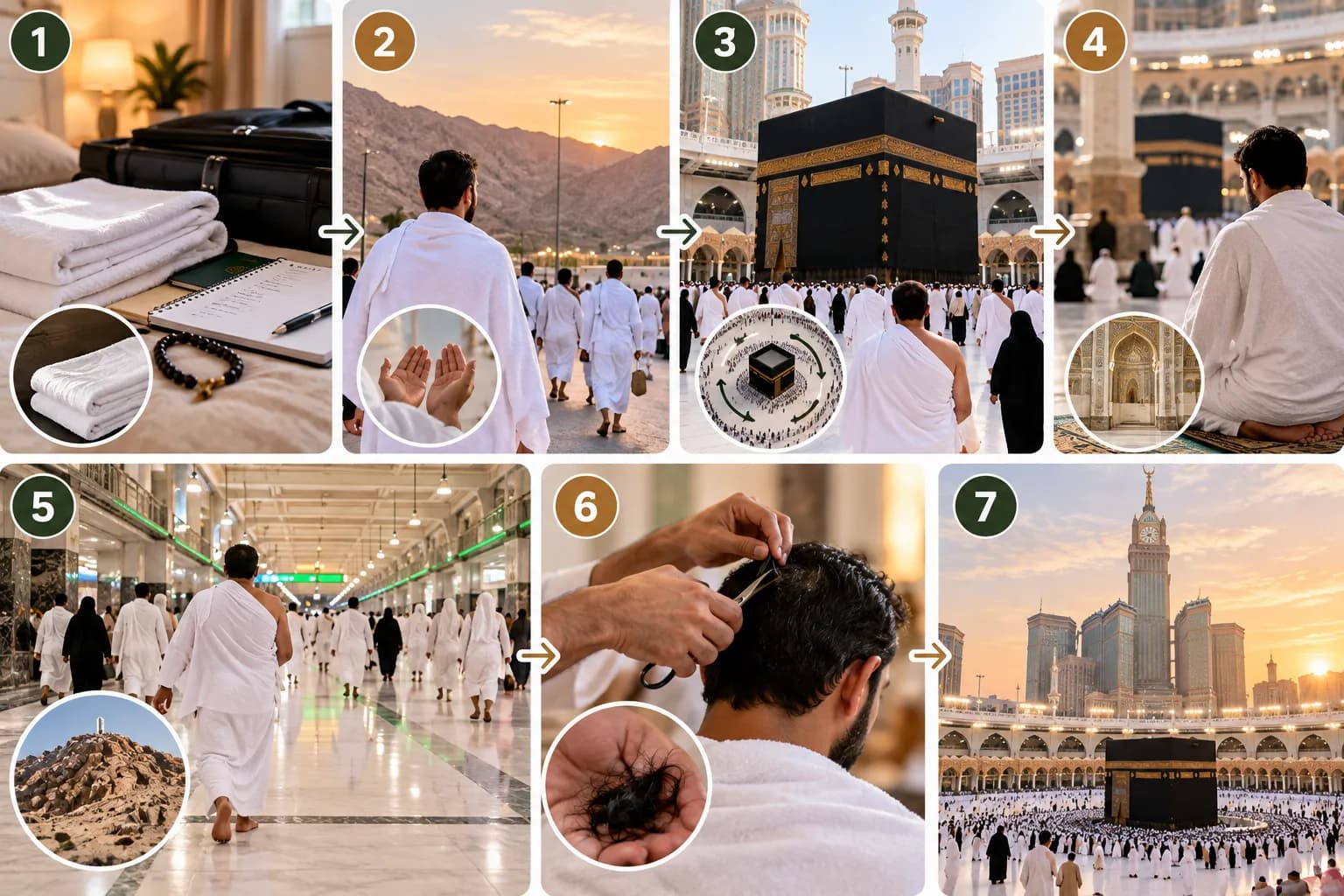
Hajj, the pilgrimage to Makkah
The Day of Arafah (9th of Dhul Hijjah)
Eid al-Adha (10th of Dhul Hijjah)
Udhiyah/Qurbani, the sacrifice offered at Eid
The Days of Tashriq (11th, 12th, and 13th)
The Islamic calendar is lunar. Each month begins with the sighting or calculation of the new moon, and a lunar year is about 10–11 days shorter than a Gregorian year. So Dhul Hijjah moves earlier each year on the Gregorian calendar and passes through every season over time.
Why Are the First 10 Days of Dhul Hijjah So Important?
The Hadith of Ibn Abbas
The clearest evidence is a hadith narrated by Abdullah ibn Abbas (may Allah be pleased with them both). The Prophet ﷺ said, in meaning, that there are no days in which righteous deeds are more beloved to Allah than these ten days. The Companions asked, "Not even jihad in the way of Allah?" He replied, "Not even jihad, except for a man who goes out with his life and his wealth and returns with nothing."
This hadith is recorded in Sahih al-Bukhari (no. 969), Sunan Abi Dawud (no. 2438), and Jami' at-Tirmidhi (no. 757). It is authentic. The exact wording differs slightly between collections, so this article gives the meaning.
Notice what the hadith says. It does not limit the virtue to pilgrims. It speaks of righteous deeds in general, so prayer, Quran, kindness, charity, and Dhikr are all included.
A Related Report on Dhikr
A report from Abdullah ibn Umar in Musnad Ahmad encourages believers to increase Tahlil, Takbir, and Tahmid during these days. Some scholars have graded it authentic and others have discussed its chain, so we mention it as supporting guidance, not as the main proof. Bukhari also records, in a note introduced before hadith 969, that Ibn Umar and Abu Hurayrah used to go out to the marketplace in these days and say Takbir, and the people would say it with them.
What the Quran Says
In Surah al-Fajr, Allah swears by several things:
"By the dawn, and by ten nights." (Quran 89:1–2)
Many leading early and classical scholars of Tafsir, including Ibn Abbas, Mujahid, and others, understood "ten nights" as the first ten nights of Dhul Hijjah. Ibn Kathir mentions this as a well-known view. Other interpretations have also been recorded. So the verse itself does not name Dhul Hijjah, but this is a prominent and well-respected understanding of it.
Another verse, about Hajj, mentions remembering Allah "on known days" (Quran 22:28). Ibn Abbas is reported to have understood these as the ten days of Dhul Hijjah.
Important note on rewards: These days are clearly described as exceptionally virtuous. We should not attach specific numbers to the reward, such as "every deed is multiplied 700 times," unless an authentic source establishes it. We trust Allah's generosity without inventing details.
Are These Days Better Than the Last 10 Nights of Ramadan?
People often ask this question. The answer scholars commonly give separates days from nights.
The hadith above speaks of the days of the first ten of Dhul Hijjah.
The last ten nights of Ramadan contain Laylat al-Qadr, which Allah describes as "better than a thousand months" (Quran 97:3).
Scholars such as Ibn Taymiyyah and Ibn al-Qayyim (may Allah have mercy on them) are known for stating that the best days of the year are the first ten days of Dhul Hijjah, while the best nights are the last ten nights of Ramadan. Some other scholars have discussed this differently, but this is a widely cited summary.
Both seasons are gifts from Allah. We do not need to rank them against each other. We benefit from each according to what makes it special.
When Do the First 10 Days of Dhul Hijjah Begin?
The month begins with the Islamic lunar calendar, and Muslim communities use different methods to start it. Some rely on local moon sighting, some follow the sighting of another country, and some use astronomical calculation.
The practical advice is to follow the reliable Islamic authority or the method used by your local community, so you start Dhul Hijjah, fast Arafah, and celebrate Eid in unity with them.
What Should Muslims Do During the First 10 Days of Dhul Hijjah?
You do not need to do everything below. Choose what is realistic for you and do it consistently.
1. Protect the Five Daily Prayers
Obligations come before optional worship. A plan full of impressive voluntary goals is not much use if the five daily prayers are rushed or missed.
Try to:
Pray each prayer on time
Prepare properly with unhurried wudu
Put your phone away and bring your attention to the prayer
Add Sunnah prayers if you can manage them. The Prophet ﷺ said that whoever regularly prays twelve voluntary rak'ahs each day, Allah will build a house for him in Paradise (Sahih Muslim, no. 728)
If you are still learning how to pray, these days are a good time to start. (See: [Internal link: How to Learn Salah])
2. Increase Quran Reading
The Quran is the heart of any worship plan. Possible goals include:
A page after each prayer
A fixed number of pages each day
Revising Surahs you have memorized
Listening to recitation while commuting or doing housework
Studying the meaning of a short Surah
Learning a few Quranic words each day
There is no single target for everyone. A beginner may read slowly. A parent may have only short windows of time. A busy worker may read for ten minutes. Consistency matters more than quantity.
(Helpful guides: [Internal link: How to Read the Quran in Arabic], [Internal link: Tajweed for Beginners], [Internal link: How to Understand the Quran Without Speaking Fluent Arabic])
3. Increase Dhikr
Dhikr means remembering Allah. These four forms are especially connected with these days:
Form | Arabic | Transliteration | Meaning |
|---|---|---|---|
Takbir | اللَّهُ أَكْبَرُ | Allahu Akbar | Allah is the Greatest |
Tahmid | الْحَمْدُ لِلَّهِ | Alhamdulillah | All praise belongs to Allah |
Tahlil | لَا إِلَٰهَ إِلَّا اللَّهُ | La ilaha illa Allah | There is no deity worthy of worship except Allah |
Tasbih | سُبْحَانَ اللَّهِ | SubhanAllah | Glory be to Allah |
You can say these while walking, commuting, cooking, or waiting. Try to be present with the meaning, not just the counting.
On Takbir during Dhul Hijjah, there are several reported wordings from the early Muslims, and scholars differ on formulas and timings. We explain this in the Dhikr section below. No single formula or schedule should be presented as the only valid one.
4. Make More Dua
Dua is worship, and you can make it in any language you understand. You do not need to translate your heart into Arabic. (Prescribed recitations inside Salah are in Arabic, but your personal Dua outside the formal words of prayer can be in your own language.)
Make a personal Dua list that may include:
Forgiveness and guidance
Your family, children, and parents
Marriage
Health
Halal provision
Beneficial knowledge
A stronger bond with the Quran
Steadfastness in faith
Muslims around the world
A good ending and success in the Hereafter
5. Make Sincere Tawbah
Repentance does not need a special season, and you can repent at any moment. But seasons like this one can motivate us to finally do it.
Tawbah has simple core elements:
Stop the sin
Regret it
Sincerely intend not to return
Restore people's rights where applicable (return what you owe, apologize, repair harm)
Allah says:
"Say: O My servants who have transgressed against themselves, do not despair of the mercy of Allah. Indeed, Allah forgives all sins. Indeed, it is He who is the Forgiving, the Merciful." (Quran 39:53)
6. Give Charity
Charity does not have to be large. Ideas include:
Helping a family in need
Supporting food programs
Contributing to beneficial Islamic education
Helping someone in hardship
Giving a small amount every day of the ten
The Prophet ﷺ said that charity does not decrease wealth (Sahih Muslim, no. 2588). Regular small giving is often easier to sustain than one large gift.
7. Fast During the First Nine Days Where Appropriate
Fasting is a righteous deed, and many scholars recommend voluntary fasting during the first nine days of Dhul Hijjah, especially the ninth (Arafah). Note the wording: the first nine days. The tenth day is Eid, when fasting is prohibited.
The evidence needs careful presentation:
A report in Sunan Abi Dawud (no. 2437) says the Prophet ﷺ fasted the nine days of Dhul Hijjah. Scholars differ on its grading.
Aisha (may Allah be pleased with her) said she never saw the Prophet ﷺ fast the "ten" (Sahih Muslim, no. 1176). Scholars explain this in several ways, for example that she did not witness it, or that he may have left it at times to avoid it being seen as obligatory.
Imam an-Nawawi and others hold that fasting these days is recommended, based on the general virtue of righteous deeds, with special emphasis on Arafah.
Three points to keep distinct:
First nine days: voluntary fasting is encouraged
Day of Arafah (9th): especially recommended for non-pilgrims
Eid al-Adha (10th): fasting is prohibited
Fasting is not required for everyone. If you are ill, pregnant, nursing, elderly, traveling, or otherwise unable, you are not excluded from these days. You can contribute through Quran, Dhikr, Dua, charity, and kindness.
8. Improve Character and Relationships
Righteous deeds are broader than ritual worship. During these days you can:
Control your anger. The Prophet ﷺ said the strong person is the one who controls himself when angry (Sahih al-Bukhari, no. 6114)
Forgive and reconcile
Keep family ties
Be kind to parents and spouses
Be patient with children
Be honest and avoid gossip
Help neighbors
9. Learn Something About Islam
The Prophet ﷺ said that whoever travels a path seeking knowledge, Allah makes easy for him a path to Paradise (Sahih Muslim, no. 2699). Ideas for these days:
Study the meaning of a short Surah
Learn the meaning of what you recite in Salah
Read about the life of Ibrahim عليه السلام
Learn how Hajj works
Start Quranic Arabic or improve your Tajweed
Learn one new Dua with its meaning
(See: [Internal link: Quranic Arabic], [Internal link: 100 Most Common Words in the Quran])
10. Encourage Your Family to Participate
You can make Dhul Hijjah a family experience:
Short family Dhikr after Maghrib
A shared Quran time
A story of Prophet Ibrahim for children
A family charity jar
Writing Arafah Dua lists together
Learning about Hajj
Preparing for Eid together
Keep everything age-appropriate and short.
The Day of Arafah: The Most Important Day to Prepare For
What Is the Day of Arafah?
The Day of Arafah is the 9th of Dhul Hijjah. On this day pilgrims stand on the plain of Arafah near Makkah, making Dua and seeking forgiveness. The Prophet ﷺ said, "Hajj is Arafah" (reported in Sunan at-Tirmidhi and Sunan Abi Dawud), because the Hajj is not valid without standing there.
It is also the day Allah revealed the verse "This day I have perfected for you your religion…" (Quran 5:3; see Sahih al-Bukhari, no. 45).
Why It Matters Even If You Are Not Performing Hajj
The Prophet ﷺ said that there is no day on which Allah frees more of His servants from the Fire than the Day of Arafah (Sahih Muslim, no. 1348). That mercy is not limited to people physically in Arafah. It is a day for every believer to turn to Allah.
Fasting Arafah for Non-Pilgrims
Abu Qatadah (may Allah be pleased with him) reported that the Prophet ﷺ was asked about fasting the Day of Arafah and said that it expiates the sins of the previous year and the coming year (Sahih Muslim, no. 1162).
Please note:
Scholars generally explain that this refers to minor sins. Major sins require sincere Tawbah.
We state the reward as the hadith states it, nothing more.
Scholars differ on which day non-pilgrims should fast when moon sighting differs by region. Some follow the day pilgrims stand at Arafah. Others follow their own local sighting. Follow the guidance of your local community or trusted scholars.
Dua, Dhikr, Repentance, Quran, and Charity
Use the day for:
Dua, the heart of the day. The Prophet ﷺ said the best Dua is the Dua of the Day of Arafah, and the best of what he and the prophets before him said is: La ilaha illa Allah, wahdahu la sharika lah, lahul mulku wa lahul hamd, wa huwa ala kulli shay'in qadir (Sunan at-Tirmidhi, no. 3585, graded hasan by many scholars)
Dhikr and istighfar (seeking forgiveness)
Quran reading and reflection
Charity, even a small amount
Guarding your tongue and behavior if you are fasting
Should Pilgrims Fast on the Day of Arafah?
No, not in the same way. The guidance differs.
Muslims not performing Hajj: Fasting Arafah is highly recommended, as in the hadith above.
Pilgrims standing at Arafah: The Prophet ﷺ did not fast on that day while at Arafah. His wife Maymunah and others sent him a drink of milk and he drank it while people watched (Sahih al-Bukhari, no. 1658; Sahih Muslim, no. 1123).
Based on this, many scholars say it is better for the pilgrim not to fast, so he or she has strength for Dua and worship. Some scholars permit it for a pilgrim who is strong and will not be weakened by it. This is a recognized difference and not a major dispute. The point is that the recommendation for non-pilgrims does not apply identically to pilgrims.
A Practical Day of Arafah Worship Plan
This is a sample only. If your day looks different, that is fine.
After Fajr
Pray Fajr
Morning Adhkar
A short Quran session
A few minutes of Dua
Morning
Fulfill work, study, or family responsibilities
Say Dhikr when you have a free moment
Give some charity
Guard your tongue and behavior
Around Dhuhr
Pray Dhuhr
Read Quran
Make personal Dua
Afternoon
Set aside a focused Dua time, ideally 15–30 minutes
Seek forgiveness
Dhikr and reflection
Before Maghrib
Spend the final stretch of the day in Dua and remembrance
Many people prefer the afternoon for Dua because it matches the time pilgrims spend at Arafah. We do not claim that any specific hour is guaranteed to be accepted.
What Should I Ask Allah for on Arafah?
If long Dua feels hard, think in categories. Speak sincerely in your own words:
Your faith: guidance, sincerity, steadfastness, stronger Salah, connection to the Quran
Forgiveness: for your past, and for your parents and loved ones
Your family: spouse, children, parents, siblings
Your future: study, work, marriage, direction
Your health: physical and mental
Your provision: halal income, ease from debt
The Ummah: relief for Muslims in hardship
The Hereafter: a good ending, Paradise, safety from the Fire
Some Quranic Duas
For this world and the next (Quran 2:201):
رَبَّنَا آتِنَا فِي الدُّنْيَا حَسَنَةً وَفِي الْآخِرَةِ حَسَنَةً وَقِنَا عَذَابَ النَّارِ
Rabbana atina fid-dunya hasanah wa fil-akhirati hasanah wa qina 'adhab an-nar.
"Our Lord, give us good in this world and good in the Hereafter, and protect us from the punishment of the Fire."
For steadfastness (Quran 3:8):
رَبَّنَا لَا تُزِغْ قُلُوبَنَا بَعْدَ إِذْ هَدَيْتَنَا وَهَبْ لَنَا مِن لَّدُنكَ رَحْمَةً ۚ إِنَّكَ أَنتَ الْوَهَّابُ
Rabbana la tuzigh qulubana ba'da idh hadaytana wa hab lana min ladunka rahmah, innaka antal-Wahhab.
"Our Lord, do not let our hearts deviate after You have guided us, and grant us mercy from Yourself. Indeed, You are the Bestower."
For forgiveness (Quran 7:23, the Dua of Adam and Hawwa):
رَبَّنَا ظَلَمْنَا أَنفُسَنَا وَإِن لَّمْ تَغْفِرْ لَنَا وَتَرْحَمْنَا لَنَكُونَنَّ مِنَ الْخَاسِرِينَ
Rabbana zalamna anfusana wa in lam taghfir lana wa tarhamna lanakunanna minal-khasirin.
"Our Lord, we have wronged ourselves, and if You do not forgive us and have mercy on us, we will surely be among the losers."
For prayer and family (Quran 14:40, from Ibrahim عليه السلام):
رَبِّ اجْعَلْنِي مُقِيمَ الصَّلَاةِ وَمِن ذُرِّيَّتِي ۚ رَبَّنَا وَتَقَبَّلْ دُعَاءِ
Rabbi-j'alni muqimas-salati wa min dhurriyyati, Rabbana wa taqabbal du'a.
"My Lord, make me an establisher of prayer, and from my descendants. Our Lord, accept my supplication."
What Is the Best Dhikr for the First 10 Days of Dhul Hijjah?
The main forms are Takbir, Tahmid, Tahlil, and Tasbih, as discussed above. For ordinary Muslims, the simplest approach is to say them often, in your own words and at your own pace, and to reflect on their meaning.
Unrestricted vs. Restricted Takbir
Unrestricted (mutlaq) Takbir can be said at any time: walking, working, traveling, in the home, in the marketplace. It is connected with the start of Dhul Hijjah, based on the hadith of Ibn Umar and the practice of Ibn Umar and Abu Hurayrah mentioned above.
Restricted (muqayyad) Takbir is said specifically after the obligatory prayers during a defined period around Eid and the Days of Tashriq.
Scholars of the schools differ on when restricted Takbir starts and ends. Broadly, the reported periods range from around Fajr of the Day of Arafah to around Asr of the 13th of Dhul Hijjah, but the exact start and end differ between schools and sometimes between pilgrims and non-pilgrims. All of these are recognized positions, so follow the practice of your community or a trusted local scholar.
A commonly used wording, reported from some early Muslims such as Ibn Mas'ud, is:
اللَّهُ أَكْبَرُ، اللَّهُ أَكْبَرُ، لَا إِلَٰهَ إِلَّا اللَّهُ، وَاللَّهُ أَكْبَرُ، اللَّهُ أَكْبَرُ وَلِلَّهِ الْحَمْدُ
Allahu Akbar, Allahu Akbar, La ilaha illa Allah, wallahu Akbar, Allahu Akbar, wa lillahil-hamd.
Other wordings are also reported, for example with three Takbirs at the start. This is not a single mandatory formula.
The Days of Tashriq are described by the Prophet ﷺ as "days of eating, drinking, and remembrance of Allah" (Sahih Muslim, no. 1141).
Dhul Hijjah Worship Plan for Busy Muslims
The best plan is the one you can keep while fulfilling your responsibilities. These plans are not for comparing yourself with others.
10-Minute Minimum Plan
Pray the five obligatory prayers on time
Read a small portion of Quran, even a few verses
Say Dhikr during spare moments
Make a short Dua before sleeping
30-Minute Plan
Everything above, plus:
More Quran, perhaps a page or two
A focused Dua session
A few minutes of Islamic learning
Daily charity if feasible, even something small
60-Minute+ Plan
Everything above, plus:
Longer Quran reading or study
Additional voluntary prayer
Longer, more personal Dua
Beneficial knowledge (a lesson, a book, a class)
Family worship
Start at the level where you are. You can move up if Allah makes it easy.
A 10-Day Dhul Hijjah Worship Plan
Each day has a theme to help you stay focused. Do not limit any act of worship to one day. Keep praying, reading Quran, and making Dhikr every day.
Day 1: Intention and Repentance
Set your goals, write your Dua list, and make sincere Tawbah.
Day 2: Quran
Increase your Quran engagement. Read, listen, or revise.
Day 3: Dhikr
Establish a simple, consistent remembrance routine.
Day 4: Charity
Give something and look for ways to help others.
Day 5: Salah
Focus on the quality and punctuality of your prayers.
Day 6: Family
Strengthen family ties and involve your household.
Day 7: Knowledge
Learn something beneficial about Islam, Quran, Arabic, Hajj, or Dhul Hijjah.
Day 8: Prepare for Arafah
Prepare your Dua lists, plan your fasting meal, and clear your schedule where possible.
Day 9: The Day of Arafah
Fast if eligible and able, and focus on Dua, Dhikr, repentance, Quran, and good deeds.
Day 10: Eid al-Adha
Pray Eid prayer, celebrate, express gratitude, and perform Udhiyah/Qurbani if it applies to you. Do not fast.
What If Dhul Hijjah Has Already Started and I Did Nothing?
Please do not give up. The remaining days still carry the same virtue. Nobody is asking you to "catch up" on what you missed.
Start with the day you have.
If you find this on Day 6:
Pray your next prayer with full presence
Read even a few verses of Quran
Say Dhikr now
Give a small amount of charity today
Write your Arafah Dua list
Plan to fast Arafah if you can
Small, sincere steps count.
Dhul Hijjah for New Muslims
If you are new to Islam, some of these terms may be unfamiliar:
Hijri months: the Islamic lunar calendar
Hajj: the pilgrimage to Makkah, one of the five pillars of Islam
Arafah: the plain where pilgrims stand on the 9th of Dhul Hijjah
Udhiyah/Qurbani: the animal sacrifice offered at Eid al-Adha
Takbir: saying "Allahu Akbar"
Eid prayer: the special congregational prayer on the morning of Eid
A simple beginner plan:
Protect your five daily prayers.
Read or listen to Quran, even a little.
Make Dua in your own language.
Remember Allah with simple Dhikr.
Fast Arafah if you are able and the guidance applies to you.
Attend Eid prayer if you can. The Sunnah encourages families to attend (Sahih al-Bukhari, no. 324; Sahih Muslim, no. 890).
Keep learning.
That is enough. You do not need to take on dozens of extra practices.
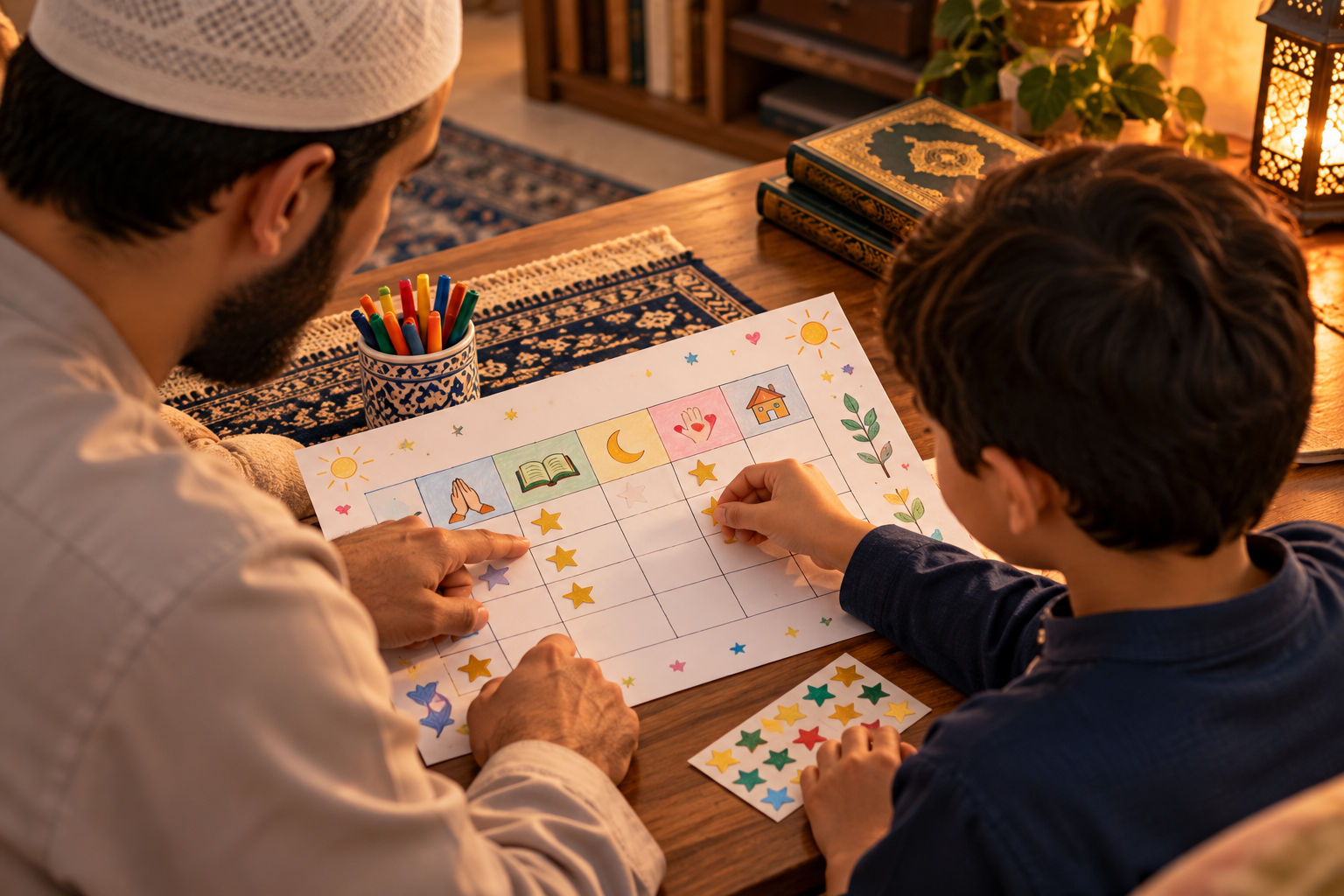
Dhul Hijjah With Children
The goal is to create warm, positive Islamic memories, not a prize competition. Ideas:
Make a 10-day good-deeds chart with simple, kind actions
Tell the story of Ibrahim and Ismail عليهما السلام using reliable sources
Teach the Talbiyah and explain its connection to Hajj:
Labbayk Allahumma labbayk, labbayka la sharika laka labbayk, innal-hamda wan-ni'mata laka wal-mulk, la sharika lak (Sahih al-Bukhari, no. 1549; Sahih Muslim, no. 1184)
"Here I am, O Allah, here I am. Here I am, You have no partner, here I am. Indeed all praise and favor belong to You, and all sovereignty. You have no partner."Watch age-appropriate explanations of Hajj
Practice Takbir together
Encourage small acts of charity from their own pocket money
Help them make their own Dua lists
Prepare for Eid together
Learn a short Surah as a family
Talk about gratitude and obedience to Allah
The Story of Ibrahim and the Meaning Behind Eid al-Adha
The Quran tells how Prophet Ibrahim عليه السلام, after long waiting, was blessed with a son. Later he saw in a dream that he was commanded to sacrifice him. In Surah as-Saffat, the son responds with trust and patience (Quran 37:102). When both submitted, Allah called out to Ibrahim and ransomed his son "with a great sacrifice" (Quran 37:107).
We should say what the Quran says and avoid adding popular details that lack a reliable source. The lessons are clear:
Submission to Allah
Trust (Tawakkul)
Obedience in difficult moments
Sacrifice and putting Allah first
Gratitude for Allah's mercy
The Quran also reminds us what sacrifice is really about: "Their meat will never reach Allah, nor their blood, but what reaches Him is piety from you" (Quran 22:37).
Udhiyah/Qurbani: What Beginners Should Know
What it is: Udhiyah (Qurbani) is the sacrifice of an eligible animal (such as a sheep, goat, cow, or camel) during Eid al-Adha, in worship of Allah. Allah says, "So pray to your Lord and sacrifice" (Quran 108:2). The Prophet ﷺ sacrificed two rams (Sahih al-Bukhari, no. 5565).
Who it applies to: Scholars differ. Many hold that it is a strongly recommended Sunnah (Sunnah Mu'akkadah). The Hanafi school holds that it is obligatory (Wajib) for those who are resident and meet the wealth threshold. Eligibility and details can differ by school and local circumstances.
Timing: It begins after the Eid prayer on the 10th. The end time differs between schools. Some end on the 12th and others extend through the 13th, with sunset ending the period.
Distribution: The Quran mentions eating from it and feeding the needy (Quran 22:28). A common practice is to share it between yourself, relatives and friends, and the poor.
Why we do it: To remember the devotion of Ibrahim and Ismail, to practice obedience and gratitude, and to feed others.
For specific rulings, speak to a trusted local scholar or your mosque.
Hair and Nails During Dhul Hijjah
Umm Salamah (may Allah be pleased with her) reported that the Prophet ﷺ said that when the new moon of Dhul Hijjah appears and one of you intends to offer a sacrifice, he should refrain from cutting his hair and nails until he has sacrificed (Sahih Muslim, no. 1977).
Key points:
The hadith applies to someone who intends to offer Udhiyah. It does not apply to every Muslim.
It is not Ihram, and the other restrictions of Ihram do not apply.
Scholars differ on the ruling. Some, including many Hanbali scholars, consider it obligatory. Others, such as many Shafi'i and Maliki scholars, consider it recommended. The Hanafi position is that it is not required. Those who hold it as not obligatory often cite Aisha's report that the Prophet ﷺ sent animals for sacrifice without abstaining from anything himself (Sahih al-Bukhari, no. 1700).
If someone trims out of necessity or forgetfulness, or discovers the rule late, they should seek sincere forgiveness. Details vary, so ask a trusted scholar.
Follow the guidance that fits your situation and your school or local scholars.
Common Dhul Hijjah Mistakes
1. Thinking Dhul Hijjah Matters Only for Pilgrims
The hadith speaks of righteous deeds in general. Every Muslim can benefit.
2. Waiting Until Arafah to Begin Worship
Arafah is the peak, but the days before it are also valuable. Start on Day 1.
3. Saying "Fast the Ten Days" Without Remembering Eid Is Not a Fasting Day
Fasting on Eid al-Adha is prohibited (Sahih al-Bukhari, no. 1990; Sahih Muslim, no. 1137). Say "first nine days."
4. Setting Unrealistic Worship Goals
Huge plans can collapse after two days. A small plan that continues is better.
5. Neglecting Obligatory Salah While Focusing on Optional Acts
Fard comes first. Optional acts support it and do not replace it.
6. Treating Dhikr as Mere Counting Without Reflection
Try to feel what you are saying. Even a few mindful repetitions are valuable.
7. Spending Eid Preparation Entirely on Shopping and Food
Celebrating Eid is good. Just keep room for gratitude, prayer, charity, and family connection.
8. Ending All Spiritual Effort Immediately After Eid
The best outcome of these days is a habit you carry forward.
After Eid: Don't Lose Everything You Built
Do not let these ten days become an isolated event. After Eid, try to maintain:
Your five daily prayers
Daily Quran, even a small amount
Morning and evening Dhikr
Regular Dua
Regular charity
Islamic learning
Choose one practice to continue consistently. A single habit that lasts is worth more than ten that fade.
Practical Dhul Hijjah Checklist
☐ Protect my five daily prayers
☐ Make sincere Tawbah
☐ Read Quran daily
☐ Increase Takbir, Tahmid, Tahlil, and Tasbih
☐ Make daily Dua
☐ Give charity
☐ Fast appropriate days if able
☐ Prepare specifically for Arafah
☐ Avoid fasting on Eid al-Adha
☐ Improve my character
☐ Help my family participate
☐ Learn something beneficial
☐ Prepare for Eid with gratitude
☐ Continue at least one habit afterward
Turning a Season Into a Lasting Relationship With the Quran
Sacred seasons are a good time to increase Quran recitation, and also to improve the quality of your relationship with the Quran. Possible goals:
Improve your Quran reading
Correct your Tajweed
Memorize a short Surah
Understand common Quranic vocabulary
Begin Quranic Arabic
Help your children start regular Quran learning
Frequently Asked Questions
1. Why are the first 10 days of Dhul Hijjah important?
The Prophet ﷺ said no days are more beloved to Allah for righteous deeds than these ten (Sahih al-Bukhari, no. 969). Many scholars also link Quran 89:2 ("ten nights") to them.
2. What should I do during the first 10 days of Dhul Hijjah?
Protect your obligatory prayers and increase Quran, Dhikr, Dua, repentance, charity, good character, and learning. Fast the first nine days if able, and especially Arafah.
3. Should Muslims fast all 10 days of Dhul Hijjah?
No. Fasting is recommended on the first nine days if you are able, not on the tenth. It is optional, not obligatory, and those who cannot fast can worship in other ways.
4. Can you fast on Eid al-Adha?
No. Fasting on Eid al-Adha is prohibited (Sahih al-Bukhari, no. 1990; Sahih Muslim, no. 1137).
5. What is the best Dhikr during Dhul Hijjah?
Takbir, Tahmid, Tahlil, and Tasbih are all encouraged. Say them often and with understanding.
6. What should I do on the Day of Arafah?
If able, fast (non-pilgrims), and spend time in Dua, Dhikr, repentance, Quran, and charity. Guard your tongue and behavior.
7. What is the reward for fasting on Arafah?
The Prophet ﷺ said it expiates the sins of the previous and coming year (Sahih Muslim, no. 1162). Scholars generally understand this to refer to minor sins, with major sins requiring Tawbah.
8. Can pilgrims fast on Arafah?
The Prophet ﷺ did not fast at Arafah during Hajj (Sahih al-Bukhari, no. 1658). Many scholars say it is better not to fast. Some allow it for a pilgrim who is strong enough.
9. When should Takbir begin during Dhul Hijjah?
Unrestricted Takbir is encouraged from the start of Dhul Hijjah. Restricted Takbir after prayers has different start and end times across schools, generally between Fajr of Arafah and Asr of the 13th.
10. Can I cut my hair or nails during Dhul Hijjah?
The hadith (Sahih Muslim, no. 1977) addresses the person who intends to offer Udhiyah. Scholars differ on whether it is obligatory or recommended. Others are not covered. Follow reliable local guidance.
11. What can children do during Dhul Hijjah?
They can make a good-deeds chart, learn the story of Ibrahim, practice Takbir and the Talbiyah, give small charity, make Dua lists, and help prepare for Eid.
12. What if I missed the first few days of Dhul Hijjah?
Start now. The remaining days are still valuable. Begin with the next prayer, a little Quran, Dhikr, and charity.
Conclusion: Ten Days, One Opportunity at a Time
You do not need a perfect schedule to benefit from the first 10 days of Dhul Hijjah.
One person may fast many days. Another may be unable to fast but increases Quran and Dhikr. A parent may worship while caring for children. A worker may use the commute for remembrance. A new Muslim may simply learn what Arafah means for the first time. Each of them can be sincere and close to Allah.
So choose a few realistic actions and begin today.
Do not measure your Dhul Hijjah only by how many items you completed on a checklist. Let these days move you toward a stronger relationship with Allah that continues after Eid.
When the season ends, the Quran remains. If you want to keep growing, Araby Academy offers one-to-one Quran, Tajweed, and Arabic lessons for non-native speakers and families.